



What's Happening?
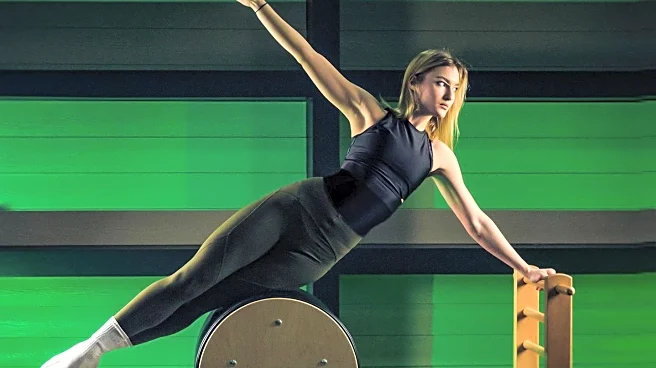
Cecilia Harris, a certified personal trainer, emphasizes the importance of circuit training for maintaining strength and longevity, particularly for individuals over 40. Harris, who co-founded the health and fitness app RWL, shares her weekly workout routine, which includes lower and upper-body strength training, Pilates, and mobility exercises. Her approach focuses on consistency and smart programming rather than heavy lifting, aiming to protect bone density, muscle mass, and metabolic health. Harris advocates for making workouts a habitual part of daily life, akin to brushing teeth, and stresses the importance of discipline over motivation. Her routine is designed to be sustainable, with structured workouts five to six times a week, accommodating
busy schedules and retreats.
Why It's Important?
The emphasis on circuit training and strength exercises for individuals over 40 is crucial for addressing age-related health concerns such as declining bone density and muscle mass. Harris's approach highlights the need for sustainable fitness routines that can be integrated into daily life, promoting long-term health benefits rather than short-term aesthetic goals. This perspective is particularly relevant as the U.S. population ages, with more individuals seeking ways to maintain their health and independence. By focusing on smart programming and consistency, Harris provides a model for effective fitness that can be adapted to various lifestyles, potentially influencing public health strategies and personal fitness goals.
What's Next?
As more people become aware of the benefits of circuit training and structured workouts, there may be increased demand for fitness programs tailored to midlife and older adults. Fitness professionals and health organizations could develop more resources and classes that focus on longevity and strength, catering to the needs of an aging population. Additionally, Harris's approach may inspire individuals to prioritize fitness as a lifelong commitment, leading to broader societal shifts in how exercise is perceived and practiced.
Beyond the Headlines
Harris's emphasis on discipline over motivation and the integration of fitness into daily routines reflects broader cultural shifts towards sustainable health practices. This approach challenges traditional views of fitness as a short-term endeavor, promoting a lifestyle that values long-term health and well-being. As more people adopt this mindset, there could be significant impacts on healthcare costs and quality of life, with individuals experiencing fewer age-related health issues and greater independence.