






What's Happening?
A report by Cushman & Wakefield predicts that the adoption of artificial intelligence (AI) will lead to a 12% increase in demand for industrial, office, and retail space in the United States over the next decade. This translates to an additional 330 million
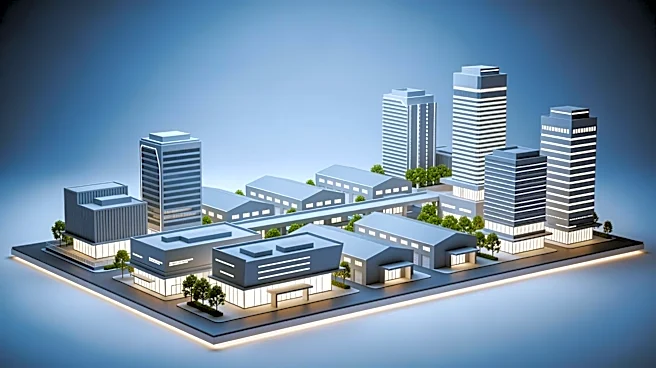
square feet of space needed, according to the firm's baseline scenario forecast. The report highlights the uncertainty surrounding AI's economic impact, noting that while some industries may require less space due to AI, others could see growth. The forecast includes four scenarios, with the baseline scenario being the most probable. The anticipated demand is primarily for industrial properties, such as warehouses and distribution centers, driven by AI's role in inventory management. The office sector is expected to see a shift towards high-quality, adaptable spaces.
Why It's Important?
The projected increase in demand for commercial real estate due to AI adoption could have significant implications for the U.S. economy and real estate market. As AI continues to integrate into various industries, the need for modern, adaptable spaces could drive new construction and investment in the real estate sector. This growth may benefit developers, investors, and businesses seeking to expand their operations. However, the uncertainty surrounding AI's impact means that stakeholders must remain adaptable to changing market conditions. The potential for AI to enhance productivity and efficiency could lead to economic growth, but it also poses challenges, such as the need for fewer workers in some sectors.
What's Next?
As AI adoption progresses, stakeholders in the real estate and business sectors will need to monitor its impact closely. Developers may need to focus on creating spaces that cater to the evolving needs of businesses leveraging AI. Policymakers and industry leaders will likely engage in discussions about the implications of AI on employment and economic growth. The real estate market may see shifts in demand patterns, with a focus on high-quality, flexible spaces that can accommodate technological advancements.