






What's Happening?
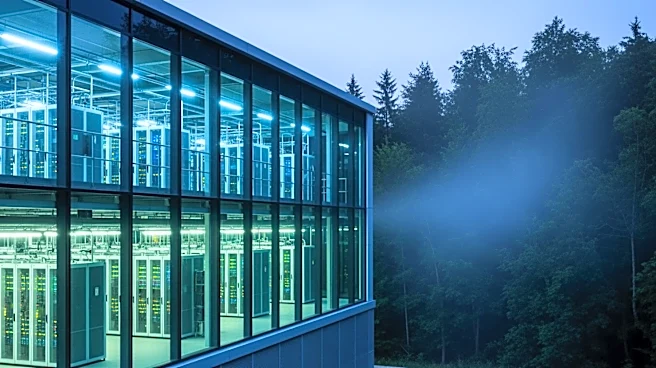
TeraWulf, a Maryland-based Bitcoin mining firm, announced a strategic pivot towards artificial intelligence (AI) by acquiring the Muskie Data Campus in Kentucky. This move marks a significant shift as the company plans to build over 1 gigawatt of AI data
center capacity, moving away from Bitcoin mining. TeraWulf's Bitcoin mining revenues fell by 50% in Q1 2026, while AI compute revenue surged by 117%, now accounting for 60% of total revenues. This transition reflects a broader industry trend where companies are diversifying into AI and high-performance computing due to more stable revenue prospects compared to the volatile Bitcoin market.
Why It's Important?
TeraWulf's shift from Bitcoin mining to AI highlights a significant trend in the cryptocurrency industry, where companies are seeking more stable and predictable revenue streams. The move underscores the challenges faced by Bitcoin miners due to price volatility and reduced block rewards following the 2024 Bitcoin halving. By investing in AI infrastructure, TeraWulf and similar companies can leverage more consistent contract-based revenues, which are less susceptible to market fluctuations. This transition could signal a broader industry realignment, with potential impacts on energy resource allocation and investment strategies in the tech and cryptocurrency sectors.
What's Next?
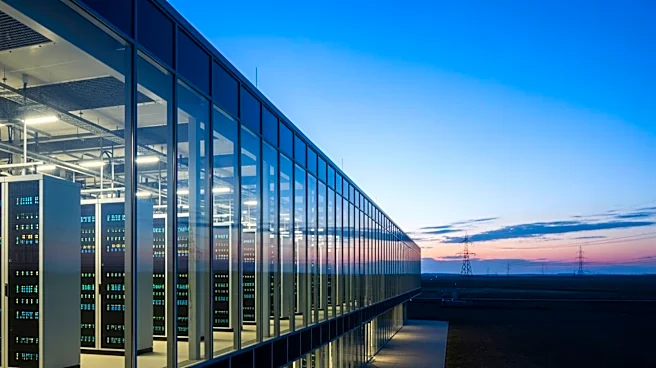
TeraWulf's acquisition of the Muskie Data Campus is expected to bring 500 MW of AI data center capacity online by late 2028, with an additional 500 MW by 2030. The company's focus on AI infrastructure is supported by significant contracts, including a $3.7 billion agreement with AI cloud provider FluidStack. As more companies follow TeraWulf's lead, the industry may see a shift in energy resources from Bitcoin mining to AI and high-performance computing. This trend could influence future investment decisions and operational strategies within the tech and cryptocurrency sectors.