



What's Happening?
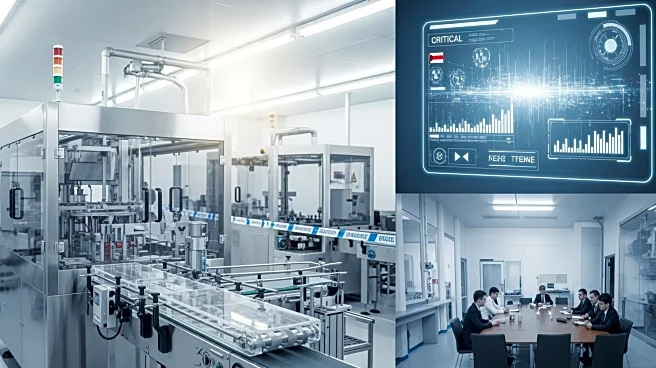
In the pharmaceutical and advanced therapy manufacturing sectors, there is a growing emphasis on adopting Lean principles and smart automation to enhance efficiency and reduce costs. The industry faces significant pressure to scale operations, accelerate
timelines, and cut expenses. However, many organizations have found that simply adding digital systems and automation layers has not improved performance. Instead, these additions often lead to increased complexity and inefficiency. Lean manufacturing, originally developed in the automotive industry, is being applied to streamline processes by eliminating non-value-added steps, reducing waiting times, and building quality into the process. This approach aims to transform complex systems into manageable ones that encourage continuous improvement. Smart automation, when applied correctly, can amplify human potential and drive exponential gains, but it must be built on a foundation of simplicity.
Why It's Important?
The adoption of Lean principles and smart automation in pharmaceutical manufacturing is crucial for maintaining competitiveness in a rapidly evolving industry. By focusing on simplicity and efficiency, companies can reduce waste, improve product quality, and accelerate production timelines. This approach not only enhances operational efficiency but also allows for faster adaptation to market changes and regulatory requirements. Organizations that successfully implement these strategies can scale operations without losing control, innovate without chaos, and ultimately provide better access to next-generation therapies for patients. The emphasis on simplicity as a competitive advantage highlights the importance of clear, efficient processes in achieving long-term success in the pharmaceutical sector.
What's Next?
As pharmaceutical companies continue to embrace Lean principles and smart automation, the industry is likely to see a shift towards more streamlined and efficient manufacturing processes. This transformation will require a cultural change within organizations, focusing on clarity, trust, and capability. Leaders will need to prioritize simplicity and empower teams to solve problems rather than manage bureaucracy. The future of pharmaceutical manufacturing will belong to those who design clear systems where every person, process, and technology works in harmony. This shift will not only improve operational efficiency but also enhance the industry's ability to meet the growing demand for advanced therapies.