





What's Happening?
Airlines across the United States, including American, Alaska, Delta, JetBlue, Southwest, and United, have recently increased their baggage fees due to rising fuel costs linked to geopolitical tensions. The new fees have added approximately $10 more per
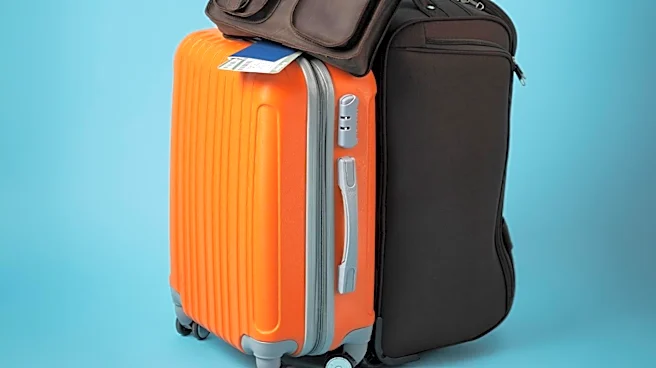
checked bag, with domestic flight fees starting at $45 for the first bag. As summer travel approaches, travelers are likely to feel the financial impact of these increases. However, experts like Paul Stewart, founder of My Baggage, suggest that travelers can avoid these fees by packing smarter. Techniques such as rolling clothes instead of folding, using the space inside shoes for storage, and creating a capsule wardrobe can significantly increase the usable space in a carry-on bag, potentially eliminating the need to check luggage.
Why It's Important?
The increase in baggage fees represents a broader trend of rising travel costs, which could impact consumer behavior and the travel industry. As airlines adjust their pricing strategies in response to external economic pressures, travelers may seek alternative ways to manage expenses, such as adopting more efficient packing methods or choosing airlines with lower fees. This shift could influence airline revenue models and customer satisfaction. Additionally, the emphasis on smarter packing could lead to increased demand for innovative luggage solutions and travel accessories, potentially benefiting businesses in these sectors.
What's Next?
Travelers are likely to continue seeking ways to minimize travel costs, which may include adopting the packing strategies recommended by experts. Airlines may also explore further adjustments to their fee structures or introduce new services to maintain competitiveness. As the geopolitical situation evolves, fuel prices and their impact on airline operations will remain a key factor to watch. The travel industry may also see increased collaboration with luggage manufacturers to develop products that cater to the needs of cost-conscious travelers.