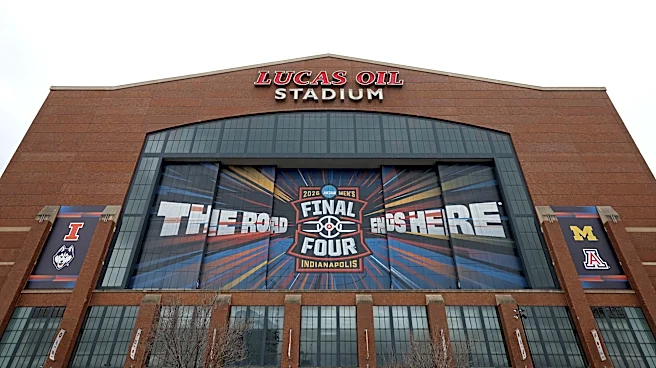



What's Happening?
During the Final Four open locker room sessions, media access to Bryce James, the son of basketball legend LeBron James, was restricted by an 'enforcer' from Klutch Sports Group, LeBron's agency. This decision was not made by Arizona, where Bryce is a redshirting
freshman, but rather by LeBron and his agency. The open locker room format typically allows media to engage with non-star players for unique stories, but Bryce's interviews were blocked, raising questions about the scrutiny he faces due to his family background. Arizona coach Tommy Lloyd emphasized the importance of giving Bryce space to develop, acknowledging the unique pressures he faces. Bryce's team, Arizona, is set to face Michigan in the Final Four, with the Wildcats being slight underdogs.
Why It's Important?
The restriction on Bryce James' interviews highlights the challenges faced by young athletes with famous parents, particularly in managing media attention and personal development. This incident underscores the influence of sports agencies in controlling narratives around athletes, which can impact public perception and the athlete's own experience. For Arizona, Bryce's presence, even as a redshirt, adds a layer of media interest and potential pressure on the team. The decision to block interviews may protect Bryce from immediate scrutiny but also raises questions about transparency and the role of media in sports. This situation could influence how other young athletes with high-profile backgrounds are managed in the future.
What's Next?
Arizona's upcoming game against Michigan in the Final Four will be closely watched, not only for the team's performance but also for any further developments regarding Bryce James' media interactions. Should Arizona advance, the team will be favored against either UConn or Illinois, potentially increasing media interest in Bryce's role and future prospects. The handling of Bryce's media access may prompt discussions within sports management circles about balancing athlete protection with media engagement. Additionally, LeBron James' continued public support for Arizona could influence perceptions and expectations around Bryce's future contributions to the team.
Beyond the Headlines
The decision to restrict Bryce James' interviews at the Final Four reflects broader themes of privacy and media control in sports. It raises ethical questions about the extent to which young athletes should be shielded from media scrutiny, especially when their family background attracts additional attention. This situation also highlights the cultural impact of celebrity influence in sports, where the actions of high-profile figures like LeBron James can shape narratives and expectations. Long-term, this incident may contribute to evolving practices in sports media relations, particularly concerning athletes with famous relatives.