






What's Happening?
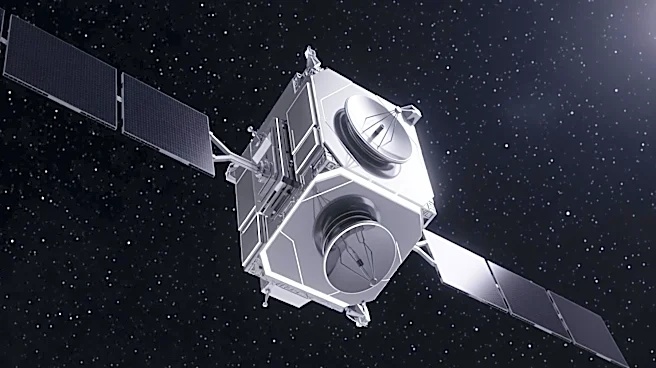
Rocket Lab has announced a significant achievement by securing a $90 million contract with the U.S. Space Force's Space Systems Command. This contract involves the design and operation of two geostationary satellites equipped with Rocket Lab's Heimdall
optical payload. This marks Rocket Lab's first venture into satellite production for geostationary orbit applications, positioning the company as a comprehensive service provider from design to launch and operations. The announcement follows another successful satellite launch for Synspective, marking the ninth successful launch of Synspective's StriX satellites. These developments have contributed to a notable rise in Rocket Lab's stock, which increased by 7.6% in a single trading session.
Why It's Important?
The contract with the U.S. Space Force is a pivotal development for Rocket Lab, as it expands the company's capabilities into geostationary satellite production, a new domain for the company. This move not only diversifies Rocket Lab's portfolio but also strengthens its position in the competitive aerospace industry. The successful contract and launch underscore the growing demand for Rocket Lab's services and its potential to secure further government and commercial contracts. The stock market's positive response reflects investor confidence in Rocket Lab's strategic direction and its ability to deliver on high-profile projects, which could lead to increased market share and revenue growth.
What's Next?
With the new contract, Rocket Lab is expected to focus on the development and deployment of the geostationary satellites, which will likely involve collaboration with the U.S. Space Force to meet specific operational requirements. The successful execution of this contract could open doors for additional government contracts and partnerships, further solidifying Rocket Lab's reputation as a reliable aerospace service provider. Additionally, the company may continue to leverage its recent successes to attract more commercial clients, potentially leading to further expansion and innovation in satellite technology.