



What's Happening?
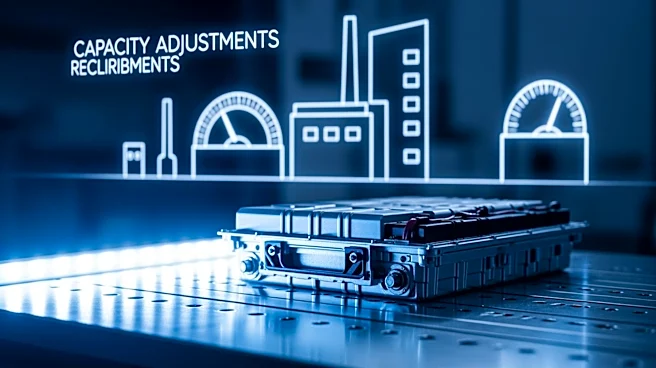
Rivian Automotive has renegotiated its loan from the U.S. Department of Energy, reducing it from $6.57 billion to $4.5 billion. This adjustment comes as the company revises its production expectations for its under-construction plant in Georgia. The original
loan was intended to support two phases of production for a total of 400,000 units annually. However, the amended loan now covers one phase with a capacity of 300,000 vehicles. This change allows Rivian to access the loan sooner and increase initial production, but it also reflects the uncertain demand for all-electric vehicles. Rivian plans to begin production of its upcoming R2 electric vehicle at the Georgia facility in late 2028.
Why It's Important?
The renegotiation of the DOE loan and the adjustment in production capacity highlight the challenges faced by EV manufacturers in scaling operations amid fluctuating market demand. Rivian's decision to lower its production targets underscores the broader industry trend of cautious investment in EV infrastructure due to uncertain consumer adoption rates. This move could influence other EV manufacturers to reassess their production strategies and financial planning. Additionally, the renegotiated loan terms may impact Rivian's financial health and its ability to compete in the growing EV market.
What's Next?
Rivian's future expansion plans for the Georgia plant will be funded through partnerships with companies like Volkswagen and Uber. The company aims to tap into the DOE loan in 2027, a year earlier than previously scheduled. As Rivian continues to navigate the evolving EV landscape, its strategic decisions will be closely watched by investors and industry stakeholders. The company's ability to adapt to market conditions and secure necessary funding will be critical to its long-term success.