

What's Happening?
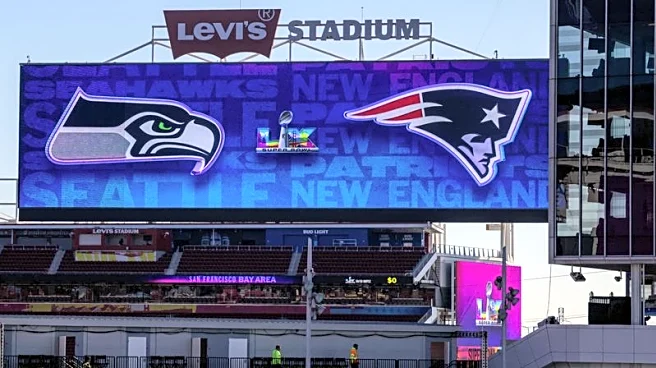
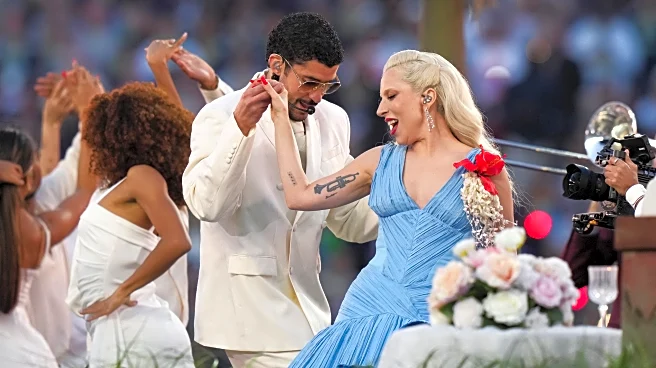
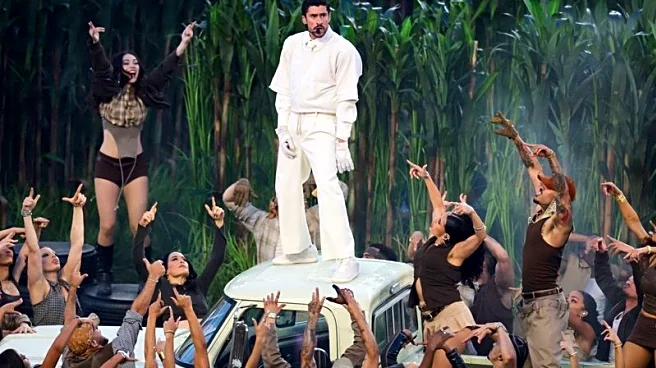
Kacey Musgraves, a Grammy Award-winning country music star, expressed her admiration for Bad Bunny's performance at the Super Bowl Halftime Show, stating it made her feel 'more proudly American' than any of Kid Rock's efforts. Bad Bunny's show, held at Levi's Stadium in Santa Clara, California, was notable for being the first entirely Spanish-language performance in the event's history. It featured hits like 'Tití Me Preguntó' and 'Yo Perreo Sola,' and included guest appearances by celebrities such as Pedro Pascal and Cardi B. The performance concluded with a message promoting love over hate. In contrast, Kid Rock organized 'The All American Halftime Show,' featuring country artists and aligning with President Trump's allyship. Despite the alternative
show's significant social media viewership, it was expected to be overshadowed by Bad Bunny's performance, which reportedly drew between 135 and 142 million viewers.
Why It's Important?
The contrasting receptions of Bad Bunny's and Kid Rock's halftime shows highlight cultural and political divides within the U.S. entertainment landscape. Bad Bunny's performance, celebrating Latino culture, signifies a growing acceptance and appreciation of diverse cultural expressions in mainstream American events. This shift could influence future entertainment programming, potentially leading to more inclusive and varied representations. Meanwhile, Kid Rock's alternative show underscores a segment of the audience that prefers traditional American themes, reflecting ongoing cultural tensions. The significant viewership of both events indicates a robust interest in diverse entertainment offerings, suggesting potential shifts in audience preferences and industry strategies.
What's Next?
The success of Bad Bunny's performance may encourage the NFL and other major event organizers to continue diversifying their lineups, potentially leading to more international and culturally varied acts in the future. This could also prompt discussions within the entertainment industry about balancing traditional and contemporary cultural expressions. Meanwhile, Kid Rock's alternative show might inspire similar events catering to specific audience segments, highlighting the need for diverse programming to meet varied audience expectations. The ongoing analysis of viewership data will likely inform future decisions regarding halftime show selections and marketing strategies.