





What's Happening?
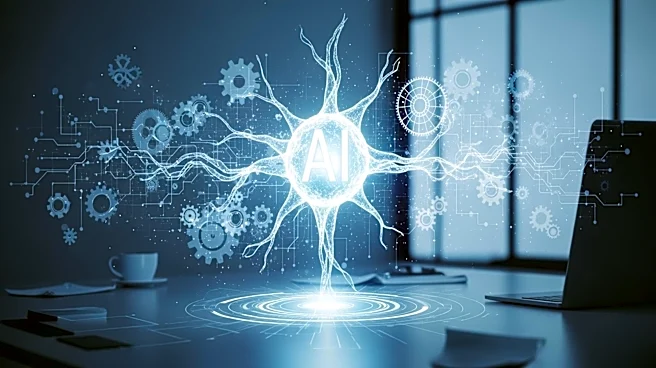
The integration of artificial intelligence (AI) into the workforce is prompting a shift in talent strategies across U.S. organizations. Traditional workforce planning, which focused on defining roles and forecasting headcount, is being replaced by a skills-first
approach. This change is driven by AI's ability to automate repeatable tasks, thereby increasing the importance of human-centric capabilities such as judgment, creativity, and leadership. Organizations are encouraged to redesign roles to focus on skills rather than job titles, ensuring that performance, learning, and compensation are aligned with these capabilities. The transformation is not just about efficiency but also about redefining the relationship between people, jobs, and skills.
Why It's Important?
The shift towards AI-driven talent strategies is crucial for maintaining competitiveness in the U.S. economy. As AI continues to reshape how work is executed, organizations that adapt their talent strategies to focus on skills will be better positioned to leverage human creativity and problem-solving abilities. This approach can lead to increased productivity and growth, as well as improved employee satisfaction and retention. By emphasizing skills over roles, companies can ensure they are prepared for the continuous changes brought about by AI, ultimately fostering a more resilient and adaptable workforce.
What's Next?
Organizations are expected to continue evolving their talent strategies to keep pace with AI advancements. This includes embedding AI across the talent lifecycle and continuously aligning skills, roles, and work as change accelerates. Companies will need to focus on building AI fluency among employees and ensuring responsible use of AI technologies. As AI agents take on more routine tasks, employees will have the opportunity to focus on higher-value activities, necessitating a redesign of roles and work processes to maximize human potential.