
What's Happening?
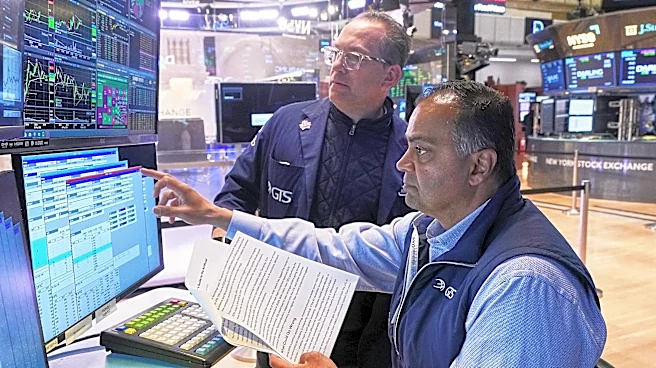
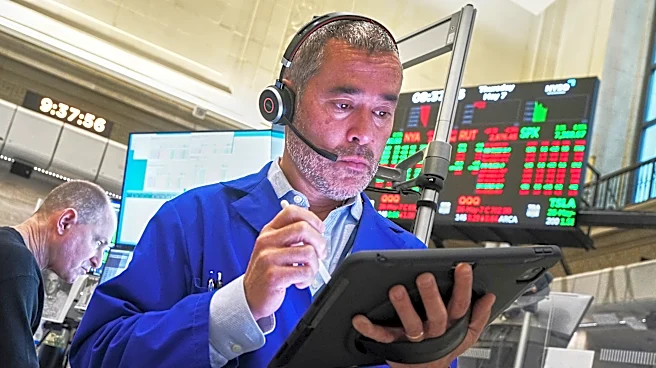
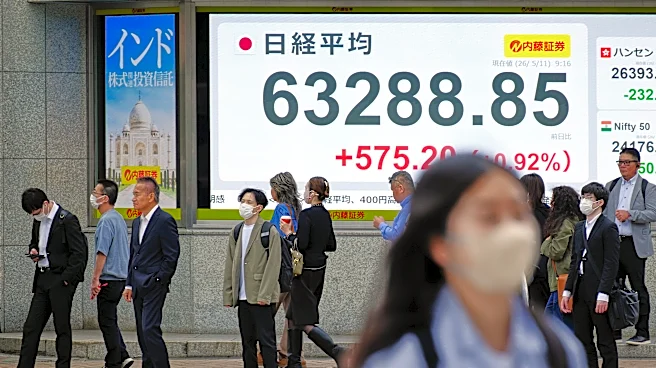
Wall Street is experiencing a downturn as concerns over the prolonged Iran war persist. Futures for major U.S. stock indices, including the S&P 500, Dow Jones Industrial Average, and Nasdaq, have all shown
declines. The S&P 500 futures fell by 0.4%, Dow Jones by 0.1%, and Nasdaq by 0.9% before the market opening. The ongoing conflict with Iran has led to a significant rise in oil prices, with U.S. crude increasing by $3.43 to $101.50 per barrel and Brent crude climbing by $3.62 to $107.83 per barrel. President Trump has stated that the U.S.-Iran ceasefire is on 'life support' following the rejection of Iran's latest peace proposal. This situation is further complicated by Trump's upcoming trip to China, a major buyer of Iran's sanctioned oil. The war has disrupted oil shipments through the Strait of Hormuz, contributing to global inflation and economic uncertainty.
Why It's Important?
The ongoing conflict with Iran and the resulting economic implications are significant for the U.S. and global markets. The rise in oil prices due to the war has contributed to inflationary pressures, affecting consumer prices and economic stability. The disruption in oil supply chains, particularly through the Strait of Hormuz, has global ramifications, impacting energy markets and economic growth. The situation also places additional pressure on President Trump as he navigates international diplomacy with China, a key player in the global oil market. The economic impact of the war is further highlighted by the upcoming release of U.S. consumer price data, which will provide insights into the inflationary effects on American households and the broader economy.
What's Next?
The next steps involve closely monitoring the U.S. consumer price data release, which will offer a clearer picture of the war's impact on inflation. Additionally, President Trump's trip to China will be pivotal, as it may influence diplomatic relations and economic strategies concerning Iran's oil exports. The financial markets will continue to react to developments in the Iran conflict, with potential implications for global economic stability and energy prices. Stakeholders, including investors and policymakers, will need to assess the evolving situation and its impact on economic policies and market strategies.