

What's Happening?
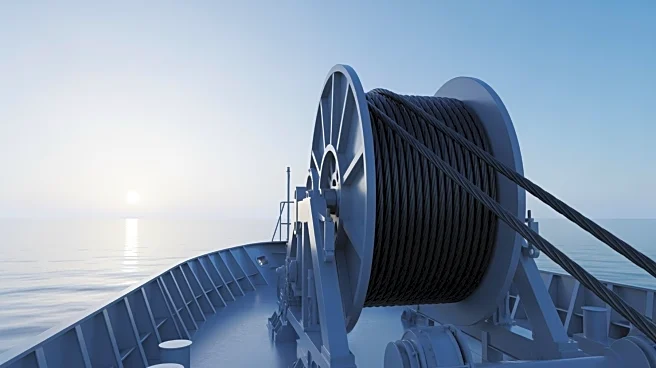
Kongsberg Maritime has been chosen to provide a comprehensive equipment package for a new ultra-large cable laying vessel being constructed for LS Marine Solution at Tersan Shipyard in Türkiye. This vessel is designed to meet the increasing global demand
for subsea high-voltage direct current (HVDC) and optical cable installations. It will measure 148.4 meters in length and 31 meters in width, with a cable carrying capacity of 13,000 tonnes and a total displacement of 18,800 tonnes. The vessel is expected to become operational in 2028 after a construction period of approximately three years. Kongsberg Maritime's contribution includes K-Pos dynamic positioning systems, integrated control and navigation systems, a battery hybrid DC electrical system, and all main propulsion and thruster units. The vessel's design aims to reduce greenhouse gas emissions and align with global ESG standards, featuring a high-capacity shore connection for zero-emission operations during port stays and cable loading activities.
Why It's Important?
The development of this advanced cable laying vessel is significant as it addresses the growing need for efficient and environmentally friendly subsea cable installation solutions. The integration of Kongsberg Maritime's systems is expected to enhance operational efficiency and reduce emissions, aligning with global environmental standards. This project highlights the increasing importance of sustainable practices in the maritime industry, particularly in the context of expanding renewable energy infrastructure such as floating wind farms. The vessel's capabilities will support the mobilization of remote cable pull-in systems, facilitating operations without the need for personnel transfer or crane-based equipment handling, thereby improving safety and efficiency.
What's Next?
As the vessel is set to enter operation in 2028, the focus will be on completing its construction and ensuring that all integrated systems function as intended. The maritime industry will likely monitor the vessel's performance closely, as its success could influence future designs and investments in similar technologies. Stakeholders in the renewable energy sector, particularly those involved in offshore wind projects, may express interest in the vessel's capabilities, potentially leading to further collaborations and innovations in subsea cable installation.
Beyond the Headlines
The introduction of this vessel could have broader implications for the maritime industry, particularly in terms of setting new standards for environmental sustainability and operational efficiency. The use of battery hybrid systems and zero-emission operations during port stays could become more prevalent, encouraging other companies to adopt similar technologies. Additionally, the vessel's design and capabilities may influence regulatory frameworks and industry best practices, promoting a shift towards greener maritime operations.