

What's Happening?
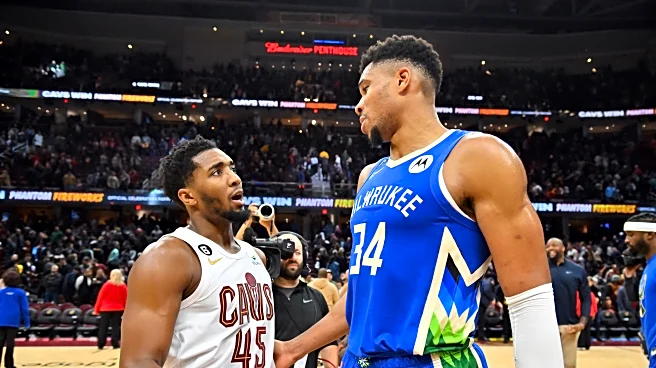
Giannis Antetokounmpo, the star forward for the Milwaukee Bucks, is currently embroiled in a dispute with his team regarding his playing status for the remainder of the 2025-26 NBA season. Antetokounmpo has been sidelined since March 15 due to a knee
injury sustained during a game against the Indiana Pacers. Despite the Bucks' poor season performance and their slim chances of making the playoffs, Antetokounmpo is eager to return to the court. However, the team has been cautious, reportedly considering shutting him down for the season to preserve his health. This has led to tensions, with the National Basketball Players Association (NBPA) releasing a statement suggesting the Bucks might be attempting to tank by keeping Antetokounmpo off the court. The Bucks have not provided a clear timeline for his return, and discussions about his future with the team, including potential trade considerations, are ongoing.
Why It's Important?
The situation with Giannis Antetokounmpo is significant as it highlights the ongoing debate over player health versus team strategy, particularly in a season where the Bucks are not playoff contenders. The decision to potentially shut down a star player like Antetokounmpo could impact the team's dynamics and future strategies, especially with trade rumors circulating. The NBPA's involvement underscores the broader implications for league policies on player participation and anti-tanking measures. This case could influence how teams manage star players' injuries and their participation in games, affecting fan engagement, team performance, and the integrity of the league.
What's Next?
As the regular season nears its end, the Bucks will need to make a decision regarding Antetokounmpo's playing status. If he remains sidelined, it could fuel further speculation about his future with the team and potential offseason trades. The Bucks' management will likely face scrutiny from fans and analysts regarding their handling of the situation. Additionally, the NBPA may continue to push for stricter enforcement of anti-tanking policies, which could lead to changes in league regulations. The outcome of this situation could set a precedent for how similar cases are handled in the future.