



What's Happening?
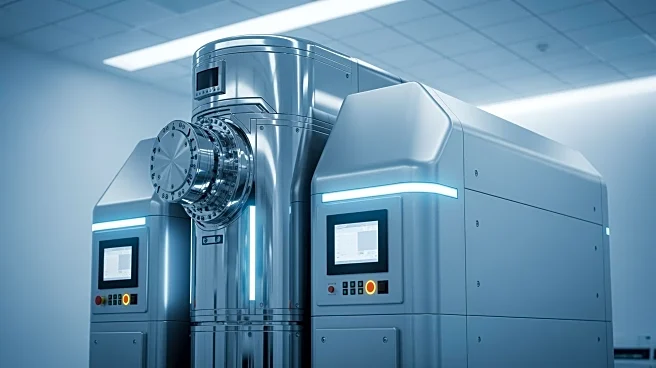
Telix Pharmaceuticals Limited has signed a contract with Ion Beam Applications S.A. (IBA) to acquire four Cyclone® KIUBE cyclotrons. These systems will be installed at select RLS Radiopharmacies sites across the United States. This strategic move aims
to bolster Telix's U.S. manufacturing capabilities, focusing on the production of critical therapeutic and diagnostic isotopes and radiopharmaceuticals for cancer treatment. The Cyclone® KIUBE 180 was chosen for its high-current capacity and industrial reliability, and each unit will be equipped with the QUANTM® Irradiation System developed by ARTMS, a Telix subsidiary. This collaboration is expected to enhance the production of high-demand isotopes like Gallium-68, Zirconium-89, Technetium-99m, and Copper-64, thereby reducing reliance on external suppliers and mitigating supply chain risks.
Why It's Important?
This development is significant as it strengthens the U.S. supply chain for critical cancer treatment isotopes, ensuring more reliable access for healthcare providers. By expanding its manufacturing footprint, Telix aims to meet the growing demand for advanced diagnostic tools and theranostic solutions, which are crucial for effective cancer care. The partnership with IBA not only enhances Telix's production capabilities but also reinforces IBA's market position in radiopharmaceutical solutions. This move is poised to improve patient outcomes by providing clinicians with the necessary tools to diagnose and treat cancer more effectively, potentially leading to better healthcare delivery and patient care across the nation.
What's Next?
The installation of these cyclotrons is expected to proceed at RLS Radiopharmacies, with a focus on achieving cGMP-compliant production standards. As the systems become operational, Telix will likely increase its production capacity, further integrating its supply chain to ensure consistent delivery of isotopes. This expansion may prompt other companies in the radiopharmaceutical industry to enhance their capabilities, potentially leading to increased competition and innovation in the sector. Stakeholders, including healthcare providers and patients, will be closely monitoring the impact of this expansion on the availability and quality of cancer treatment options.