


What's Happening?
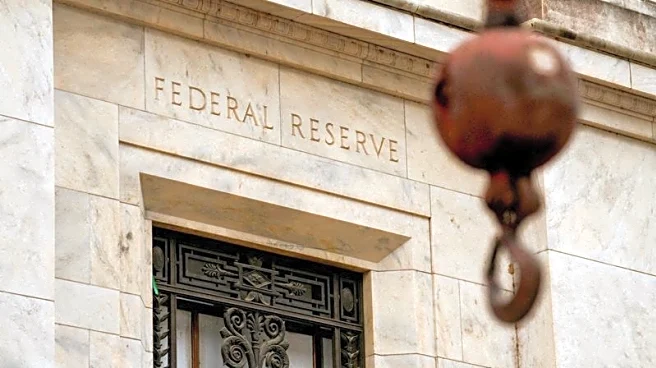
The Federal Reserve has decided to maintain its interest rates in the current range of 3.5% to 3.75% as of March 18, 2026. This decision comes amid the ongoing war in Iran and mixed economic signals, which have complicated the path to potential rate cuts.
The conflict has led to a significant increase in oil prices, raising fears of inflation. The Fed's decision was supported by a majority vote of 11-1, with Stephen Miran dissenting in favor of a rate cut. The central bank remains divided on the economic outlook, with some members advocating for further rate cuts to support the labor market, while others are concerned about inflation risks.
Why It's Important?
The decision to hold interest rates steady is crucial as it reflects the Fed's cautious approach in navigating the economic uncertainties posed by the Iran conflict and domestic economic challenges. The surge in oil prices due to the conflict has heightened inflation concerns, which the Fed must balance against the need to support employment. The decision also underscores the Fed's commitment to its dual mandate of price stability and maximum employment. The ongoing geopolitical tensions and economic signals, such as sluggish economic growth and a weak jobs report, have added complexity to the Fed's policy decisions, impacting financial markets and economic stakeholders.
What's Next?
The Federal Reserve's future actions will depend on the evolving economic and geopolitical landscape. The central bank has indicated that it may consider rate cuts in the future, but the timing and extent will be influenced by incoming data and developments in the Middle East. The Fed's decisions will be closely monitored by financial markets, businesses, and policymakers, as they could have significant implications for economic growth and inflation. Additionally, the upcoming transition in Fed leadership, with Kevin Warsh nominated to replace Jerome Powell, adds another layer of uncertainty to the central bank's future policy direction.