





What's Happening?
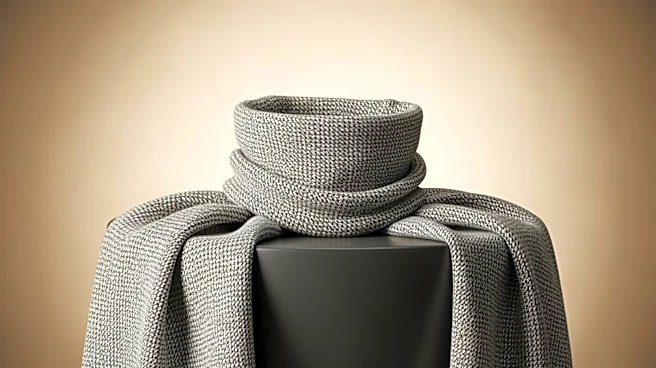
Burberry, the British luxury brand, has reported a significant increase in sales within its scarf category, marking it as a 'hero category' for the company. Under the leadership of CEO Joshua Schulman, who took over in 2024, Burberry has focused on revitalizing
its iconic products and marketing strategies, emphasizing its British heritage. The brand's scarves, ranging from $275 for silk versions to over $1,000 for cashmere, have seen double-digit sales growth. This surge is partly attributed to the popularity of the 1990s minimalist style, which has been reignited by the FX series 'Love Story,' featuring John F. Kennedy Jr. and Carolyn Bessette-Kennedy. The show has influenced fashion trends, boosting interest in preppy looks and accessories like scarves. Burberry has capitalized on this trend by expanding its silk scarf offerings and introducing 'scarf bars' in over 200 of its stores worldwide.
Why It's Important?
The resurgence of Burberry's scarf sales highlights the brand's successful adaptation to current fashion trends and its ability to attract younger consumers, particularly Gen Z. By focusing on accessible luxury items, Burberry is tapping into a market segment that values both style and affordability. This strategy not only strengthens Burberry's market position but also sets a precedent for other luxury brands aiming to appeal to younger demographics. The brand's emphasis on its British heritage and iconic products could lead to sustained growth and influence in the luxury fashion industry. Additionally, the impact of media, such as the 'Love Story' series, on fashion trends underscores the interconnectedness of entertainment and consumer behavior.
What's Next?
Burberry plans to continue expanding its scarf offerings and capitalize on the ongoing popularity of the preppy and minimalist fashion trends. The brand's cautious outlook for the upcoming year suggests a strategic approach to maintaining its market momentum while navigating potential economic uncertainties. As Burberry further integrates its 'scarf bars' and pop-up concepts in department and airport stores, it aims to enhance customer engagement and brand visibility. The company's focus on its British identity and iconic products may also lead to collaborations or new collections inspired by British cultural icons, potentially driving further interest and sales.
Beyond the Headlines
The success of Burberry's scarf category reflects broader shifts in consumer preferences towards accessible luxury and the influence of cultural nostalgia on fashion. The brand's ability to leverage its heritage and adapt to contemporary trends highlights the importance of innovation and tradition in the luxury market. This development also raises questions about the sustainability of fashion trends driven by media influences and the potential for long-term brand loyalty among younger consumers. As Burberry navigates these dynamics, its strategies may serve as a model for other luxury brands seeking to balance heritage with modernity.