



What's Happening?
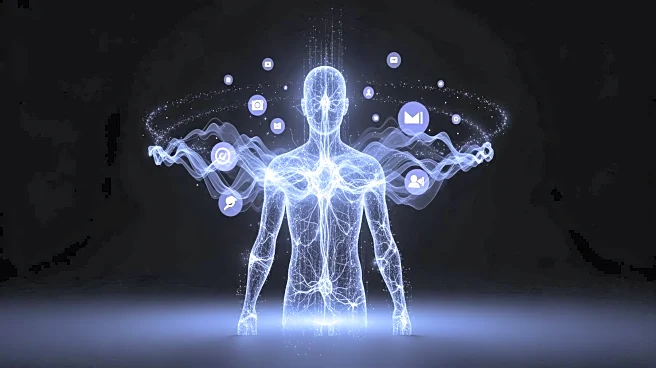
Meta has been granted a patent for an AI system designed to simulate a user's social media activity, even after their death. The patent describes a large language model capable of replicating a person's online behavior using their past data, including posts, comments, chats, and voice messages. This technology could allow the system to continue interacting on platforms like Facebook and Instagram as if the user were still active. Despite the implications, Meta has stated that the patent does not mean the feature will be developed, emphasizing that patents often protect ideas that may never become products. The concept of AI replicas of deceased users has been discussed by Meta CEO Mark Zuckerberg, who suggested that AI systems could help people
interact with memories of loved ones.
Why It's Important?
The patent raises significant ethical questions about digital identity and privacy. If developed, such technology could change how people interact with social media, blurring the lines between life and digital presence. It could also impact how individuals manage their digital legacy and consent to posthumous interactions. The idea of AI-driven digital personas challenges traditional notions of identity and raises concerns about consent and the potential for misuse. As AI technology evolves, society must grapple with the implications of digital immortality and the ethical considerations of simulating deceased individuals.
What's Next?
While Meta insists the patent is only conceptual, the filing highlights the rapid evolution of AI-driven digital identity technology. If pursued, this could lead to debates about privacy, consent, and the ethical use of AI in simulating deceased individuals. Stakeholders, including policymakers and civil society groups, may push for regulations to address these concerns and ensure responsible use of AI in digital identity management. The development of such technology could also influence public perception of AI and its role in personal and social interactions.
Beyond the Headlines
The concept of AI replicas of deceased users touches on deeper cultural and ethical dimensions, challenging societal norms around death and remembrance. It raises questions about the authenticity of digital interactions and the potential for AI to alter human relationships. The technology could also impact how people grieve and remember loved ones, offering new ways to preserve memories but also risking emotional manipulation. As AI continues to advance, society must consider the long-term implications of digital immortality and the ethical boundaries of simulating human presence.