






What's Happening?
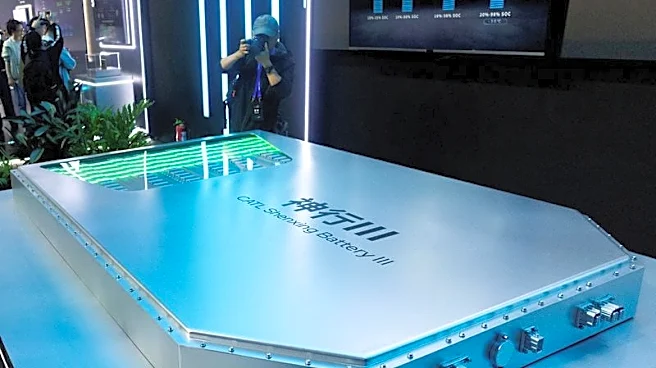
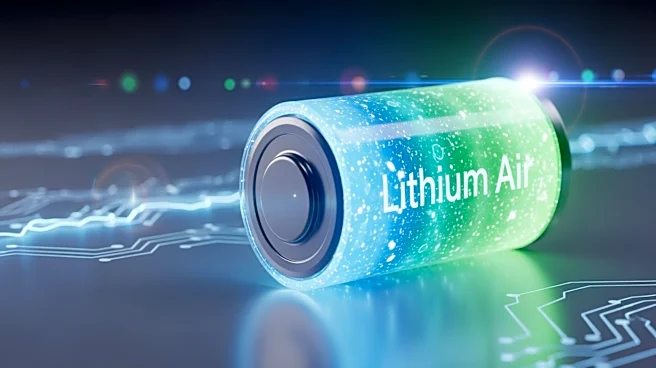
CATL, the world's largest battery manufacturer, is focusing on the development of lithium-air battery technology, which promises a theoretical energy density of 12,000 Wh/kg, comparable to gasoline. This advancement could significantly impact the electric
vehicle (EV) industry by potentially replacing conventional cars and trucks. Unlike traditional lithium-ion batteries, lithium-air batteries use lithium metal as the anode and oxygen from the air as the cathode, reducing weight and complexity. Current prototypes have achieved an energy density of over 1,200 Wh/kg, four times that of most commercial batteries today. Recent breakthroughs have addressed previous challenges such as sensitivity to moisture and carbon dioxide, and issues with catalyst stability and cycle life.
Why It's Important?
The development of lithium-air batteries could transform the EV market by providing a more efficient and lighter energy source, potentially extending the range of electric vehicles to over a thousand miles on a single charge. This could accelerate the transition from fossil fuel-powered vehicles to electric ones, reducing carbon emissions and reliance on oil. The U.S. is involved in research but faces challenges due to political and funding constraints, which could hinder its competitive edge in this technology. If successful, CATL's advancements could position China as a leader in the next generation of battery technology, impacting global automotive and energy markets.
What's Next?
CATL plans to continue its three-part strategy, focusing on mature technologies like NMC and LFP, while advancing solid-state batteries in the medium term and exploring lithium-air technology for the future. The timeline for commercial availability of lithium-air batteries remains uncertain, but ongoing research and development efforts are crucial. The U.S. may need to reassess its research funding and policy approach to remain competitive in this field. The potential success of lithium-air batteries could lead to significant shifts in the automotive industry and energy policies worldwide.
Beyond the Headlines
The development of lithium-air batteries raises questions about the future of energy storage and the geopolitical implications of technological leadership. As China advances in this field, other nations may need to consider strategic partnerships or investments in similar technologies to maintain economic and technological parity. The environmental impact of transitioning to more efficient battery technologies could also influence global climate change efforts, highlighting the importance of sustainable innovation.