



What's Happening?
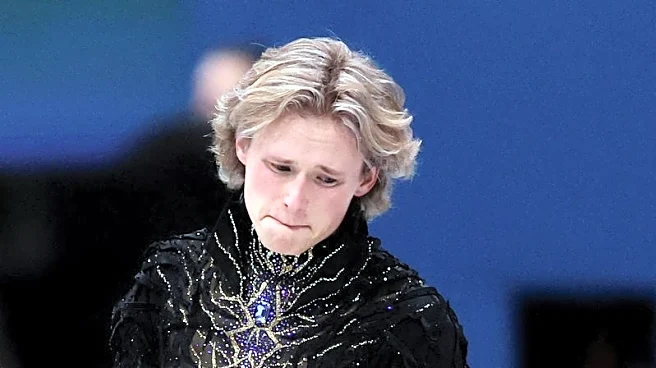
Ilia Malinin, a prominent figure skater known as the 'Quad God' for his technical prowess, faced a significant setback at the 2026 Winter Olympics. Despite being a favorite to win, Malinin's performance in the free skate event did not meet expectations, resulting in an eighth-place finish. This outcome was unexpected given his previous unbeaten streak and his reputation for pushing the boundaries of the sport with complex jumps. Malinin's performance was marred by several errors, including a popped axel and a botched combination, which deviated from his usual precision and control. The event highlighted the intense pressure athletes face at the Olympics, as Malinin himself noted the overwhelming nature of the experience.
Why It's Important?
Malinin's performance
at the Olympics underscores the unpredictable nature of competitive sports, where even the most skilled athletes can falter under pressure. His experience serves as a reminder of the mental and emotional challenges inherent in high-stakes competitions. For the U.S. figure skating community, Malinin's setback is significant as it shifts the focus to the resilience and mental fortitude required to succeed at the highest levels. Despite the disappointment, Malinin remains a key figure in the sport, with the potential to influence its future direction through his technical innovations. His journey also highlights the importance of mental preparation alongside physical training in achieving athletic success.
What's Next?
Looking ahead, Malinin will have to regroup and prepare for future competitions, including the next Winter Olympics in 2030. This period will be crucial for him to address the psychological aspects of competition and refine his techniques. The figure skating community will be watching to see how he adapts and evolves in response to this setback. Additionally, Malinin's experience may prompt discussions within the sport about the support systems available to athletes dealing with the pressures of competition. His journey could inspire changes in how athletes are prepared mentally for the rigors of Olympic-level performance.