


What's Happening?
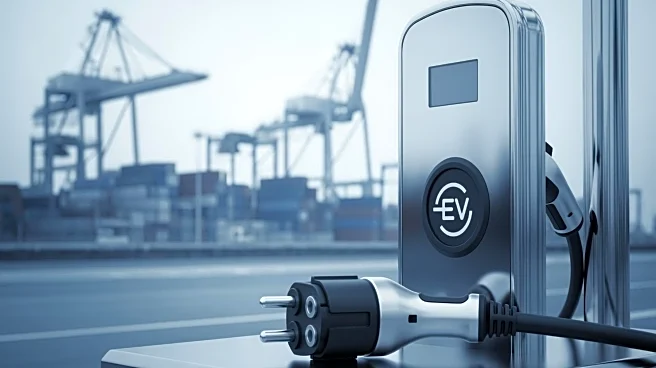
Five major U.S. automotive trade groups, including the Alliance for Automotive Innovation, have urged President Trump to maintain existing restrictions on Chinese electric vehicles (EVs) entering the U.S. market. This comes in response to President Trump's
recent comments suggesting a potential softening of his stance on Chinese automakers, conditional on their willingness to produce vehicles locally. The trade groups argue that allowing Chinese automakers to establish local production in the U.S. poses a threat to America's global competitiveness and national security. The letter emphasizes the importance of maintaining current restrictions to protect the U.S. automotive industrial base, as Chinese automakers are seen as benefiting from state subsidies that undermine fair competition.
Why It's Important?
The U.S. automotive market is one of the last major markets where Chinese automakers are effectively locked out, and maintaining this status is crucial for U.S. automakers facing plateauing global sales. The potential entry of Chinese EVs into the U.S. market could disrupt the competitive landscape, given China's significant state support for its automotive sector. This situation highlights broader trade tensions between the U.S. and China, with implications for global trade dynamics and the automotive industry's future. The outcome of these discussions could influence U.S. trade policy and impact the strategic decisions of global automakers.
What's Next?
A planned summit between President Trump and Chinese President Xi Jinping, which could have clarified the U.S. administration's position, has been delayed due to the ongoing conflict in Iran. The automotive industry is closely monitoring these developments, as any changes in U.S. trade policy could have significant implications for market access and competition. The preservation of cybersecurity regulations that restrict the use of Chinese connected vehicle software in the U.S. remains a priority for the industry, as these rules are seen as a critical barrier to Chinese market entry.