


What's Happening?
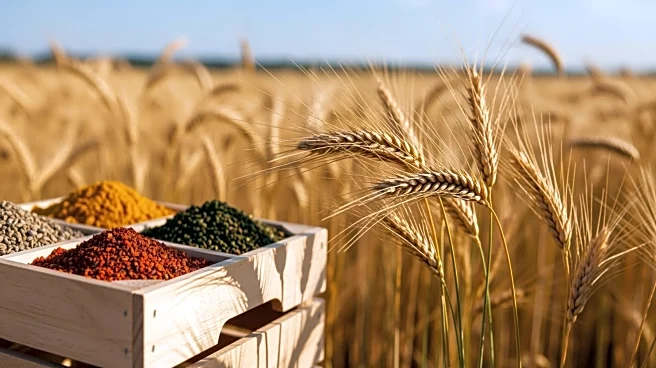
India's trade minister announced that the recent India-U.S. trade pact does not include provisions for importing genetically modified (GM) agricultural products into India. This decision addresses concerns from farm groups regarding market access and food standards. The trade agreement, which was recently advanced with an interim framework, aims to lower tariffs, reshape energy ties, and deepen economic cooperation between the two nations. As part of the agreement, the United States has agreed to provide zero-tariff access to certain Indian agricultural products, such as bananas and mangoes. This move is part of broader agricultural trade concessions agreed upon by both countries.
Why It's Important?
The exclusion of GM crop imports from the India-U.S. trade pact
is significant as it reflects India's cautious approach towards genetically modified organisms, which have been a contentious issue in global agricultural trade. By ensuring zero tariffs on select Indian farm products, the agreement could boost Indian agricultural exports to the U.S., benefiting Indian farmers and potentially increasing bilateral trade volumes. This development is also part of a strategic effort by both countries to realign global supply chains, which could have broader implications for international trade dynamics. The pact's focus on energy ties and economic cooperation further underscores the growing economic partnership between India and the U.S.
What's Next?
The trade pact's interim framework suggests that further negotiations and adjustments may occur as both countries continue to refine the agreement. Stakeholders, including agricultural groups and trade analysts, will likely monitor the implementation of the zero-tariff provisions and their impact on trade flows. Additionally, the exclusion of GM crops may prompt discussions on food safety standards and agricultural biotechnology in future trade talks. As the U.S. and India work to deepen their economic ties, other sectors may also see new opportunities for collaboration and trade expansion.