





What's Happening?
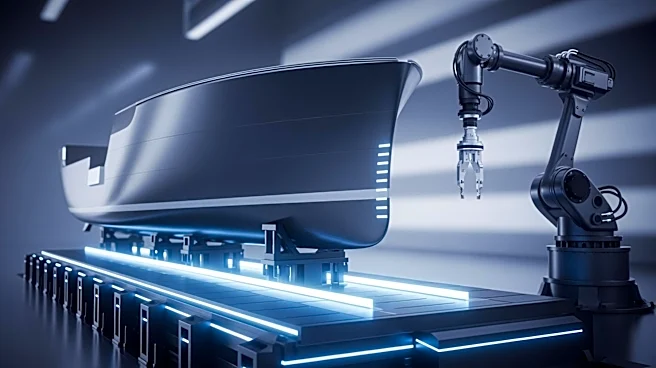
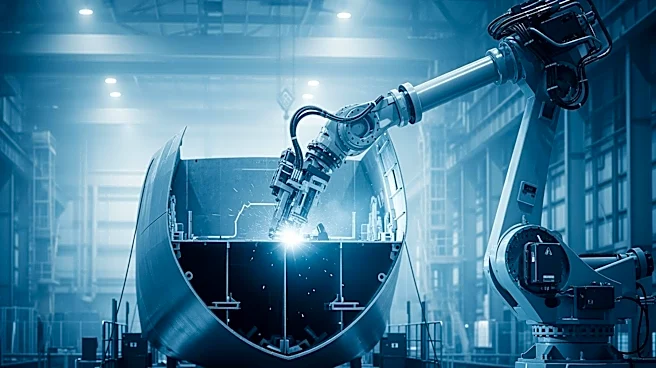
Huntington Ingalls Industries (HII) is advancing its shipbuilding operations by integrating robotics into its shipyard processes, specifically targeting tasks such as grinding, blasting, and painting. This initiative is part of HII's strategy to automate
various steps in the ship construction cycle, aiming to increase production rates for the U.S. Navy's surface combatants. The company has partnered with GrayMatter Robotics, which provides AI-enabled control software for industrial robots, enhancing efficiency and consistency in surface treatment processes. These robots are reported to be significantly faster than human workers, reducing rework by 95% due to higher quality and consistency. HII's efforts are crucial for maintaining its production rate, which is vital for the U.S. Navy's fleet readiness.
Why It's Important?
The integration of robotics in shipbuilding by HII is significant for several reasons. It addresses longstanding challenges in workforce development and aims to boost production rates, which are critical for the U.S. Navy's operational readiness. By automating labor-intensive tasks, HII can potentially reduce costs and improve the quality of its shipbuilding processes. This move also reflects a broader trend in the industry towards adopting advanced technologies to enhance productivity and competitiveness. The success of this initiative could set a precedent for other shipbuilders and industries to follow, potentially leading to widespread adoption of robotics in manufacturing.
What's Next?
HII plans to continue its collaboration with technology vendors like GrayMatter Robotics and Path Robotics to further augment its workforce and increase production efficiency. The company aims to boost throughput by another 15% this year, matching last year's performance growth. As HII continues to integrate robotics into its operations, it may explore additional automation opportunities in other areas of shipbuilding. The success of these initiatives could influence other sectors to adopt similar technologies, potentially leading to broader industrial transformation.