






What's Happening?
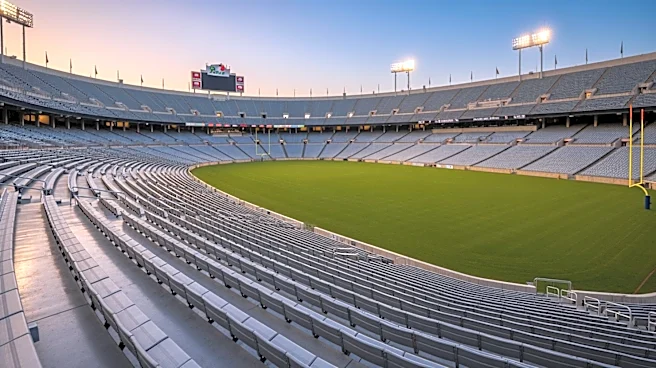
The UCLA Bruins football team will continue to play their home games at the Rose Bowl in Pasadena through 2044, following a lawsuit filed by the Rose Bowl Operating Co. and the City of Pasadena. The lawsuit was initiated after UCLA threatened to terminate
its contract with the stadium. The Rose Bowl is undergoing a significant $30 million renovation, transforming 5,000 underutilized bench seats into a field-level club with over 1,000 VIP seats. This renovation is part of the Rose Bowl Lasting Legacy Campaign, funded by sponsorship partners and private donors. The new area, called the South Field Club, will feature a 360-degree bar, dining areas, and a seamless indoor-outdoor flow. The renovations are expected to be completed in time for UCLA's home opener against San Diego State on September 12.
Why It's Important?
The decision to keep UCLA at the Rose Bowl is significant for both the university and the stadium. For UCLA, it ensures continuity and stability for their football program, which is crucial for recruiting and maintaining fan engagement. The Rose Bowl, a historic venue, benefits from the continued association with a major college football program, which helps sustain its relevance and financial viability. The renovations aim to modernize the stadium while preserving its historic charm, potentially attracting more events and visitors. This development also highlights the ongoing challenges faced by traditional sports venues in adapting to modern expectations and competition from newer facilities like SoFi Stadium.
What's Next?
As the renovations progress, stakeholders will likely focus on maximizing the new facilities' potential to enhance the game-day experience for fans and players. The Rose Bowl is also set to host a College Football Playoff quarterfinal next year, which could further solidify its status as a premier venue. However, there is pressure to host early-round games in on-campus stadiums, which could impact traditional bowl games. UCLA and the Rose Bowl will need to navigate these dynamics to ensure long-term success and relevance in the evolving landscape of college football.