

What's Happening?
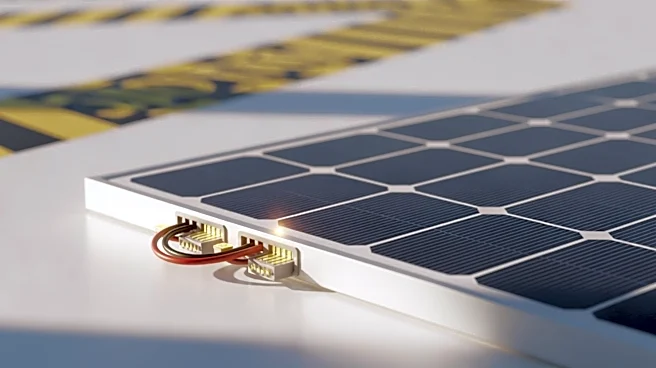
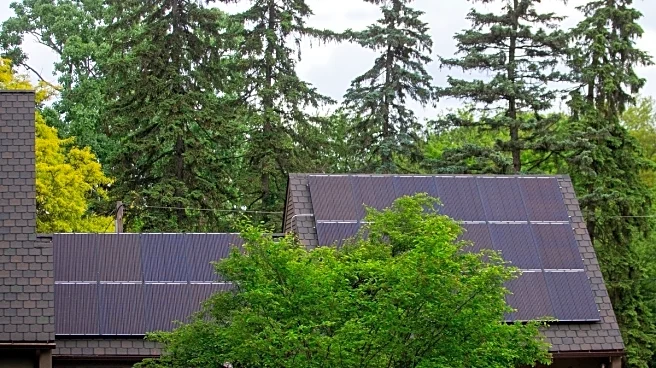
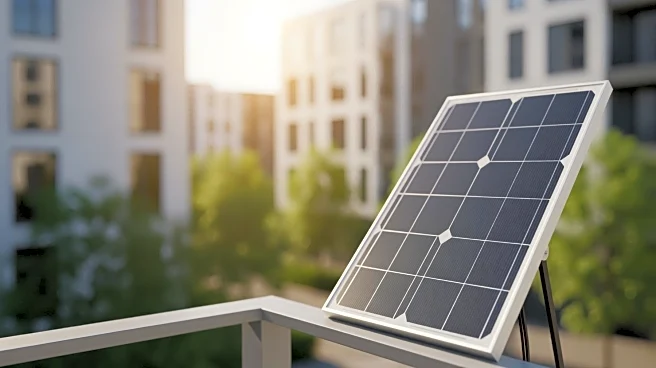
Plug-in solar panels are emerging as a cost-effective and simple alternative to traditional solar installations. These kits, which can be easily installed by homeowners without professional help, are gaining popularity in various countries. The UK government
plans to legalize these plug-in kits, which are already widely used in Germany. However, concerns about their safety persist, particularly regarding the potential for electrical hazards. The Institution of Engineering and Technology (IET) has raised issues about the suitability of existing safety devices for these systems. Despite these concerns, proponents argue that plug-in solar could significantly reduce energy costs and contribute to renewable energy goals.
Why It's Important?
The introduction of plug-in solar panels could democratize access to solar energy, making it more affordable and accessible to a broader range of consumers. This development is particularly significant in the context of rising energy prices and the urgent need to transition to renewable energy sources. However, the safety concerns highlighted by experts underscore the need for regulatory oversight to ensure that these systems are safe for widespread use. The potential for plug-in solar to alleviate financial burdens and contribute to climate change mitigation makes it a critical area of focus for policymakers and industry stakeholders.
What's Next?
As plug-in solar panels gain traction, regulatory bodies will need to address safety concerns and establish standards to ensure their safe use. The UK government has commissioned an independent study to inform future regulations. In the U.S., where plug-in solar is mostly outlawed, states like Utah are beginning to legalize these systems, and similar legislation is expected in other states. The outcome of these regulatory efforts will determine the extent to which plug-in solar can be integrated into national energy strategies.