
What's Happening?
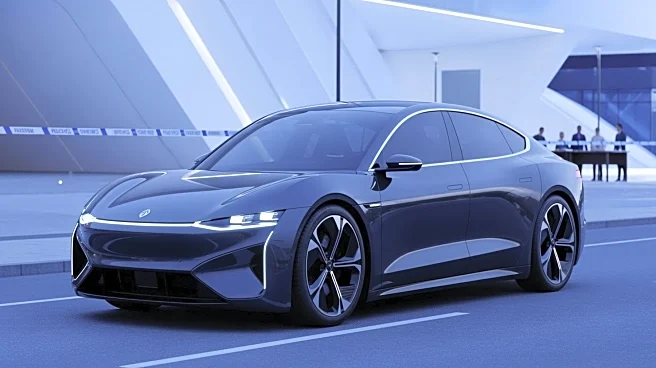
Pony.ai, a leader in autonomous driving technology, in collaboration with Toyota, has announced the mass production of the bZ4X Robotaxi. This marks a significant milestone in their partnership, which
began in 2019, aimed at advancing Robotaxi commercialization. The bZ4X Robotaxi, equipped with Pony.ai's seventh-generation autonomous driving system, is set to be introduced into commercial services across China's Tier 1 cities. The companies plan to produce over 1,000 units in 2026, contributing to Pony.ai's goal of expanding its Robotaxi fleet to more than 3,000 vehicles by the end of the year. The production involves a collaboration with GAC Toyota, utilizing Toyota's production system to ensure quality and safety.
Why It's Important?
The mass production of the bZ4X Robotaxi represents a significant step forward in the commercialization of autonomous vehicles. This development could accelerate the adoption of autonomous driving technology, potentially transforming urban transportation by reducing the need for human drivers and increasing efficiency. The collaboration between Pony.ai and Toyota highlights the growing synergy between technology companies and traditional automakers, which could lead to more innovative solutions in the automotive industry. The successful deployment of these Robotaxis could also influence regulatory frameworks and public acceptance of autonomous vehicles, paving the way for broader implementation in other regions, including the U.S.
What's Next?
As Pony.ai and Toyota continue to roll out the bZ4X Robotaxis, they will likely focus on expanding their presence in additional markets beyond China. The success of this initiative could prompt other automakers and tech companies to accelerate their own autonomous vehicle projects. Regulatory bodies may also begin to develop more comprehensive guidelines to accommodate the growing presence of autonomous vehicles on public roads. Additionally, the companies may explore further advancements in autonomous technology to enhance safety, efficiency, and user experience.
Beyond the Headlines
The introduction of mass-produced Robotaxis could have broader implications for urban planning and public transportation systems. As autonomous vehicles become more prevalent, cities may need to adapt infrastructure to support these technologies, such as dedicated lanes or smart traffic management systems. The shift towards autonomous transportation could also impact employment in the driving sector, necessitating workforce retraining and new job opportunities in vehicle maintenance and technology development.