




What's Happening?
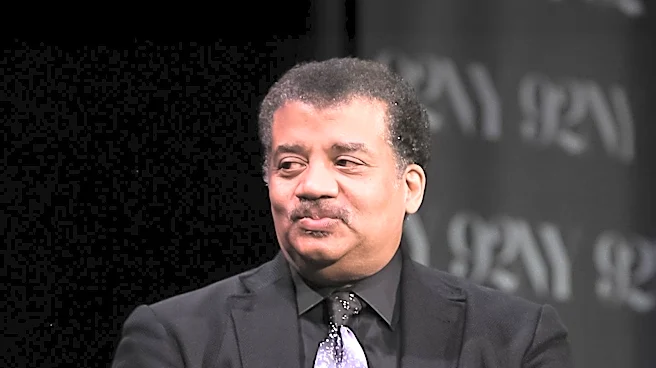
Astrophysicist Neil deGrasse Tyson recently shared his insights on what happens to our bodies after death during an episode of his podcast 'Startalk.' Tyson explained that after death, the body's molecules, which contain energy, undergo a transformation
depending on the method of body disposal. He expressed a preference for burial over cremation, as it allows the body's energy to be recycled by the earth's flora and fauna. Tyson's discussion highlights the scientific perspective on the cycle of life and death, emphasizing the continuity of energy in the universe.
Why It's Important?
Tyson's explanation offers a scientific viewpoint on death, which can provide comfort and understanding to those grappling with the concept of mortality. By framing death as a transformation rather than an end, it challenges traditional perceptions and encourages a broader acceptance of the natural cycle of life. This perspective can influence public attitudes towards burial practices, potentially leading to more environmentally conscious decisions. Additionally, Tyson's discussion may spark further interest in the scientific aspects of death, promoting educational opportunities and discussions around the topic.
Beyond the Headlines
The conversation initiated by Tyson also touches on the environmental implications of burial and cremation practices. As society becomes more environmentally aware, the impact of these practices on the planet is gaining attention. Tyson's preference for burial aligns with a growing movement towards 'green' burials, which aim to minimize environmental impact. This shift could lead to changes in the funeral industry, with increased demand for sustainable options. Furthermore, Tyson's discussion may inspire individuals to consider their own end-of-life choices, fostering a more informed and conscious approach to death.