

What's Happening?
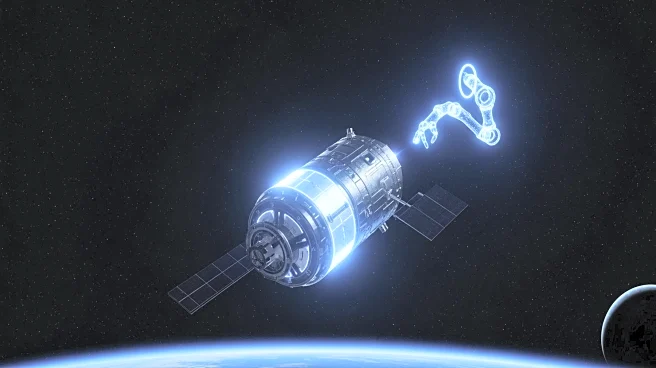
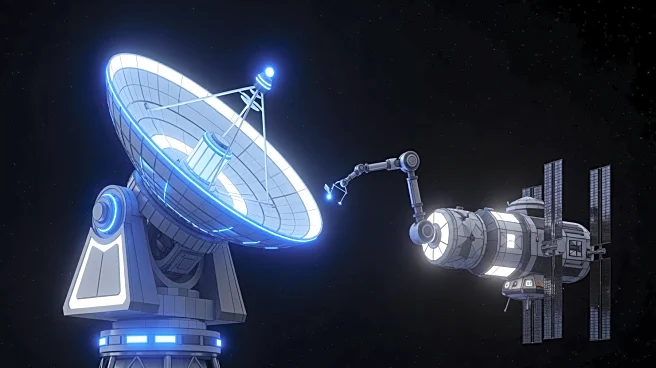
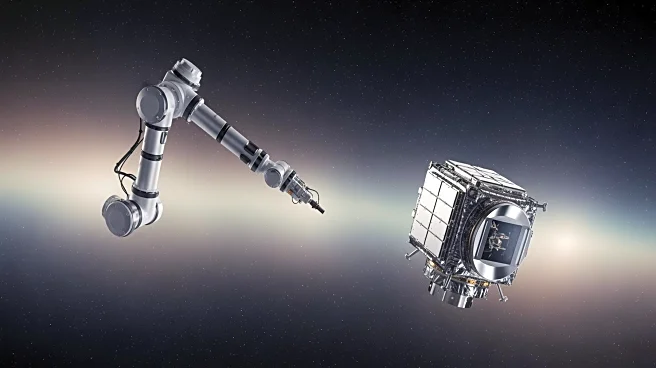
Voyager Technologies and Icarus Robotics have announced a partnership to test a new robotic platform, Joy, aboard the International Space Station (ISS) in 2027. Joy is designed to operate in pressurized spacecraft environments, using fans for movement
and equipped with manipulator arms for tasks. The mission aims to test Joy's capabilities in microgravity and its potential to assist astronauts by handling logistics and cargo tasks. This collaboration marks Icarus' first in-space mission and is part of a broader effort to develop autonomous robotic systems for future space exploration and commercial space stations.
Why It's Important?
The development and testing of robotic platforms like Joy are crucial for the future of space exploration and the commercialization of space. By automating routine tasks, these robots can free up astronauts to focus on more complex and critical missions, enhancing efficiency and safety. The partnership between Voyager and Icarus also highlights the growing collaboration between established space companies and innovative startups, driving technological advancements in the industry. Successful deployment of such technologies could pave the way for more sustainable and cost-effective space operations, influencing future missions to the Moon, Mars, and beyond.
What's Next?
As the project progresses, Icarus and Voyager will continue to refine Joy's capabilities based on data collected during the ISS mission. The insights gained will inform the development of future robotic systems, potentially leading to more advanced applications in space logistics and maintenance. The collaboration may also influence the design and operation of future commercial space stations, such as Voyager's Starlab. Stakeholders in the space industry will be monitoring the project's outcomes, as it could set new standards for robotic integration in space missions and commercial ventures.