





What's Happening?
In the early 1980s, the United States Army collaborated with filmmakers Ivan Reitman and Dan Goldberg to shoot the military comedy 'Stripes' at Fort Knox, Kentucky. The film, starring Bill Murray and Harold Ramis, follows two friends who join the Army to escape
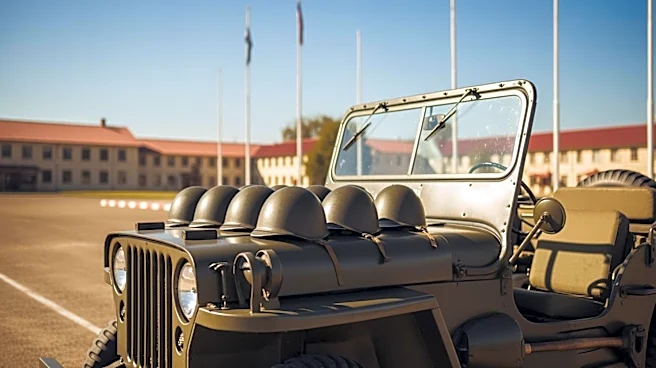
their mundane lives. The Army, known for its strict hierarchy, surprisingly embraced the comedic portrayal, providing access to soldiers, tanks, and barracks for the film's production. The movie was shot over 38 days at the fictional Fort Arnold, with the Army facilitating the logistics and even providing soldiers as extras. 'Stripes' was released in June 1981, achieving significant box office success with $85.3 million in receipts against a $10 million budget.
Why It's Important?
The collaboration between the Army and Hollywood for 'Stripes' marked a unique moment where the military embraced humor to enhance its public image. By allowing a comedic portrayal, the Army aimed to present a more approachable and humanized image during a period of peace post-Vietnam. The film's success demonstrated the potential for military-themed comedies to resonate with audiences, providing entertainment while subtly promoting military life. This partnership also highlighted the Army's willingness to engage with popular culture, potentially influencing public perceptions and recruitment positively.
What's Next?
While 'Stripes' did not receive major award nominations, its enduring popularity suggests a continued interest in military comedies. The success of 'Stripes' could encourage future collaborations between the military and filmmakers, potentially leading to more films that balance humor with military themes. The Army's openness to such projects may inspire other branches to consider similar partnerships, further integrating military narratives into mainstream entertainment.
Beyond the Headlines
The decision to film 'Stripes' at Fort Knox also underscores the strategic use of military resources in filmmaking. By providing access to real military equipment and personnel, the film achieved a level of authenticity that resonated with audiences. This collaboration set a precedent for future films seeking military cooperation, highlighting the potential benefits of such partnerships in terms of realism and public engagement. Additionally, the film's success may have contributed to a shift in how military comedies are perceived, paving the way for more nuanced and varied portrayals of military life in cinema.