







What's Happening?
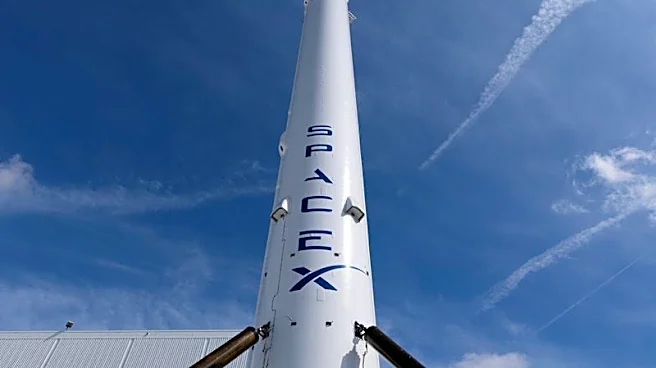
SpaceX, led by Elon Musk, is preparing for what could be the largest initial public offering (IPO) in history. The company plans to list its Class A shares on the Nasdaq under the ticker SPCX, targeting a valuation between $1.75 trillion and $2 trillion.
SpaceX's financials reveal a complex picture, with its connectivity business, primarily driven by Starlink, generating significant revenue and profit. However, other segments, including its space business and a new artificial intelligence unit, have incurred substantial losses. Despite these challenges, the IPO is expected to raise approximately $75 billion, potentially surpassing the record set by Saudi Aramco in 2019.
Why It's Important?
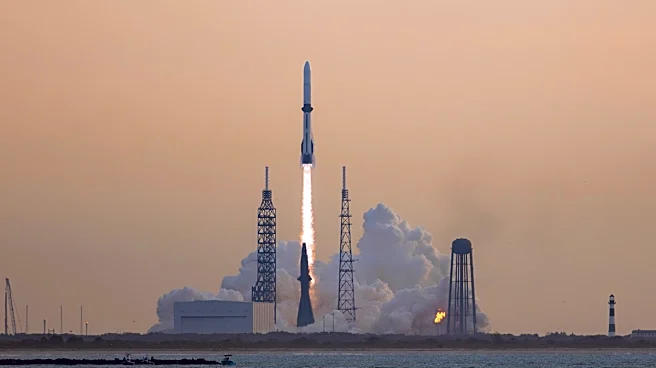
The SpaceX IPO represents a pivotal moment for the space industry, potentially reshaping investor perceptions and funding dynamics. A successful IPO could provide SpaceX with the capital needed to accelerate its ambitious projects, including the development of the Starship rocket and expansion of the Starlink network. The offering also highlights the growing importance of satellite internet services, as evidenced by Starlink's rapid subscriber growth. However, the financial losses in other segments underscore the risks associated with investing in high-growth, capital-intensive industries.
What's Next?
Investors will closely monitor SpaceX's performance post-IPO, particularly its ability to sustain growth and manage costs across its diverse business segments. The company's strategic focus on expanding Starlink's market presence and developing next-generation technologies will be critical to its long-term success. Additionally, the IPO could influence the broader space sector, encouraging other companies to pursue public offerings and attracting increased investment in space exploration and satellite communications.