





What's Happening?
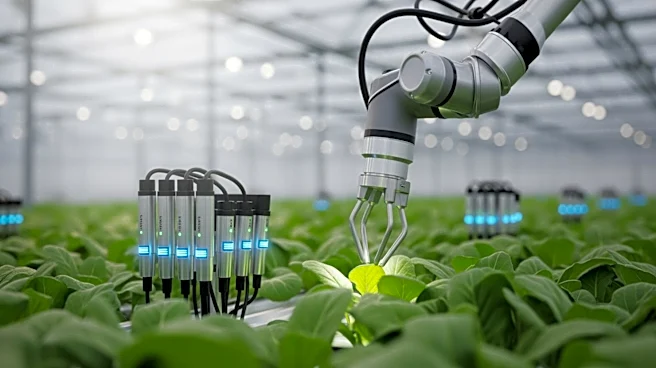
A new review published in Applied System Innovation highlights the transformative impact of artificial intelligence on agriculture. The study outlines how AI is shifting farming from labor-intensive practices to data-driven systems that enhance crop monitoring,
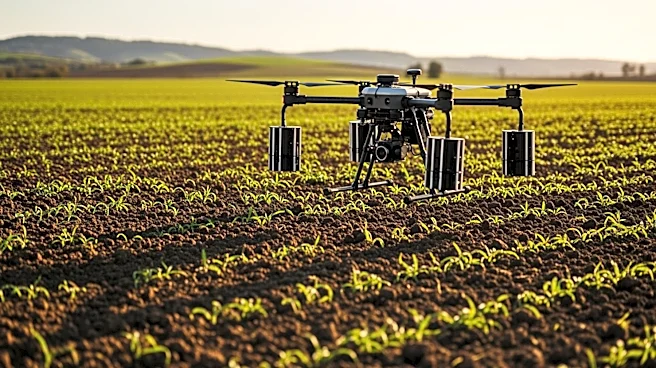
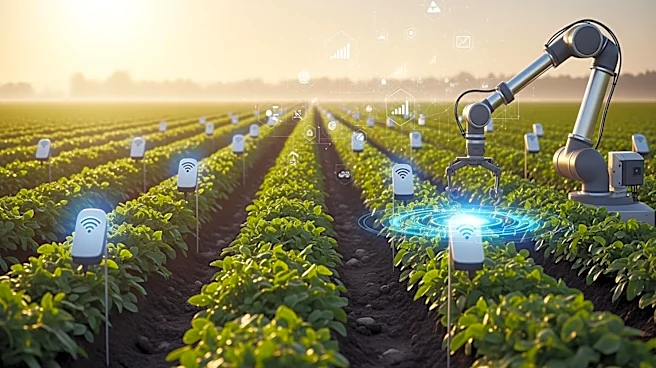
yield forecasting, and farm machinery operation. AI technologies, including sensors, drones, and robotics, are being integrated into a closed-loop farming system, enabling precise field operations with minimal human intervention. This shift addresses challenges such as population growth, climate change, and resource scarcity, positioning AI as a cornerstone of modern agriculture.
Why It's Important?
The integration of AI in agriculture is crucial for meeting the increasing global food demand while minimizing environmental impact. By improving efficiency and precision in farming practices, AI can help reduce resource use and increase crop yields, contributing to food security. The technology also offers potential economic benefits by lowering operational costs and enhancing productivity. However, the adoption of AI in agriculture faces challenges, including high costs and the need for robust data integration. Addressing these barriers is essential for widespread implementation and maximizing the benefits of AI in agriculture.
Beyond the Headlines
The review raises concerns about the accessibility of AI technologies for small and medium-sized farms, particularly in developing regions. High costs and technical requirements may limit adoption, exacerbating global inequalities in agricultural productivity. Additionally, issues of data sovereignty and digital colonialism are highlighted, as farmers in less developed areas may become data suppliers without fair compensation. To ensure inclusive growth, the development of low-cost, locally adapted AI solutions and community-based data management practices is necessary.