





What's Happening?
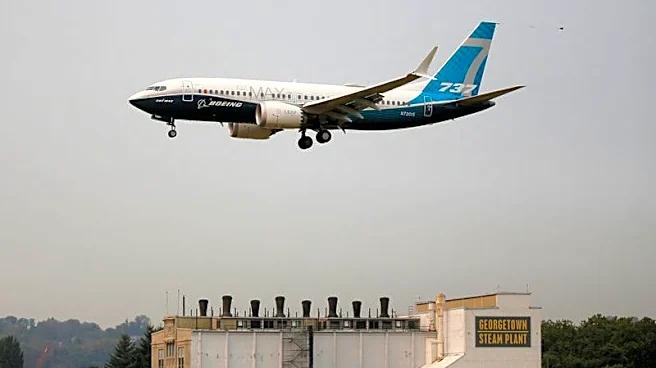
Boeing has announced plans to increase the production rate of its 737 Max aircraft to 47 jets per month. This decision follows the company's successful completion of requirements set by the Federal Aviation Administration (FAA). Currently, Boeing is manufacturing
42 aircraft per month, but the company is now in the process of ramping up to the new rate. Boeing CEO Kelly Ortberg stated that the company has passed the capstone review for the increased production rate and is confident in its ability to meet this target. The company aims to stabilize production at this rate over the next few months, with the potential for further increases in the future. Although Boeing has previously achieved production rates as high as 57 aircraft per month, Ortberg noted that maintaining such a rate would currently challenge the company's safety and quality processes.
Why It's Important?
The increase in production of the 737 Max is significant for Boeing as it seeks to recover from past challenges, including the grounding of the 737 Max fleet due to safety concerns. Meeting the new production target could enhance Boeing's market position and financial performance, as the 737 Max is one of its bestselling aircraft. The move also reflects confidence in the aircraft's safety and quality improvements. For the aviation industry, this increase in production could lead to more aircraft availability, potentially affecting airline operations and fleet expansions. Additionally, it signals a positive outlook for the aerospace sector, which has faced disruptions due to the COVID-19 pandemic and supply chain issues.
What's Next?
Boeing plans to stabilize its production at the 47-a-month rate over the coming months. The company is also considering further increasing production rates, with a long-term goal of reaching 63 aircraft per month, contingent on market demand and the ability to maintain safety and quality standards. Stakeholders, including airlines and suppliers, will be closely monitoring Boeing's progress and any potential impacts on delivery schedules and supply chain dynamics. The FAA and other regulatory bodies may continue to play a role in overseeing Boeing's production processes to ensure compliance with safety standards.