

What's Happening?
Sustainable agriculture has deep historical roots, dating back over 10,000 years to the Neolithic Revolution. Early practices such as crop rotation were used in ancient Mesopotamia. The modern concept of sustainable agriculture gained prominence in the late
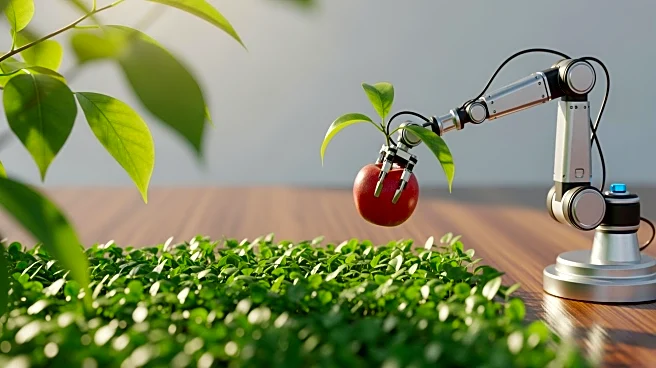
20th century, driven by environmental movements and concerns over chemical inputs and biodiversity loss. Today, sustainable agriculture incorporates advanced technologies like satellite monitoring and AI to enhance data-driven, eco-friendly farming practices. Urban farming has also seen a resurgence, contributing to local food security and reduced carbon emissions.
Why It's Important?
Sustainable agriculture is crucial for addressing environmental challenges such as soil degradation, deforestation, and biodiversity loss. It promotes ecological health and resource conservation, which are vital for long-term food security and environmental sustainability. The integration of modern technologies in sustainable practices offers new opportunities for innovation and efficiency in agriculture, supporting both ecological and economic goals. As global populations rise and climate change impacts intensify, sustainable agriculture provides a pathway to resilient and adaptive food systems.
What's Next?
The future of sustainable agriculture lies in the continued integration of technology and traditional practices. By 2026, it is expected that sustainable techniques will become mainstream, driven by urgent climate goals and regulatory frameworks. The adoption of digital and satellite-based solutions will enhance resource optimization and transparency in farm management. As sustainable practices become more widespread, they will play a critical role in achieving global food security and environmental sustainability.