





What's Happening?
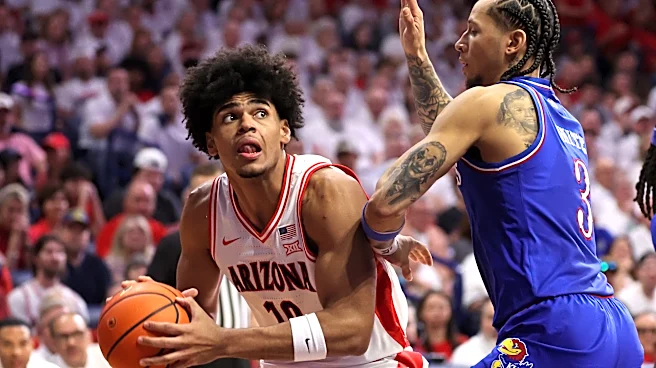
Dwayne Aristode, a former forward for the Arizona Wildcats, has transferred to the University of Oregon to continue his college basketball career. Aristode, who played 13 minutes per game last season and averaged 3.8 points, 1.7 rebounds, and 0.7 assists,
was expected to take on a larger role with the Wildcats following the departure of three starters. However, he has chosen to join the Oregon Ducks, a team that finished last season with a 12-20 record. Aristode's transfer is seen as a strategic move, likely influenced by the potential for a starting position with the Ducks.
Why It's Important?
Aristode's transfer underscores the dynamic nature of college sports, where players frequently move between programs in search of better opportunities. For the Arizona Wildcats, his departure creates a significant gap in their forward lineup, especially after losing key players to the NBA Draft. This move also highlights the influence of the transfer portal in college athletics, allowing players to seek environments where they can maximize their playing time and development. For Oregon, acquiring Aristode could bolster their roster and improve their performance in the upcoming season.
What's Next?
The Arizona Wildcats will need to address their forward depth, potentially by recruiting new players through the transfer portal. Meanwhile, Aristode will aim to secure a starting position with the Ducks and contribute to improving their record. Both teams will be closely watched as they adjust to these changes, with the Wildcats needing to fill the void left by Aristode and the Ducks integrating him into their lineup.
Beyond the Headlines
Aristode's transfer also reflects broader trends in college sports, where loyalty to a single program is becoming less common. The influence of Name, Image, and Likeness (NIL) deals and the transfer portal has made it easier for players to move between schools, seeking the best opportunities for exposure and development. This shift could lead to more frequent team changes and a more competitive landscape in college athletics.