


What's Happening?
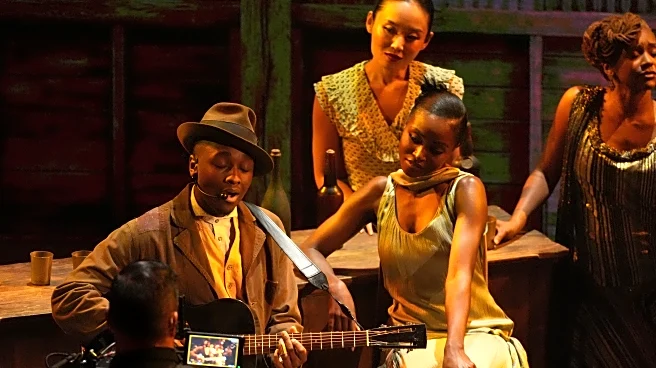
The 2026 Oscars marked a night of historic firsts and significant achievements in Hollywood. Jessie Buckley became the first Irish woman to win the Best Actress Oscar for her role in 'Hamnet'. Autumn Durald Arkapaw made history as the first woman and Black
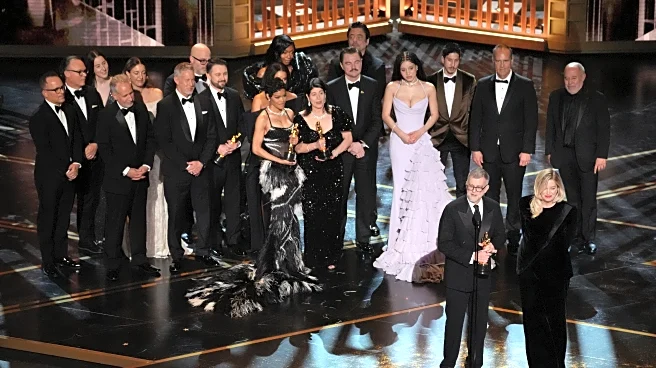
person to win the award for cinematography for 'Sinners'. The ceremony also saw the first Norwegian film, 'Sentimental Value', win the international feature film award. A new Oscar category for casting was introduced, with Cassandra Kulukundis winning for 'One Battle After Another'. Additionally, Amy Madigan won her first Oscar for Best Supporting Actress in 'Weapons', and Paul Thomas Anderson won his first Oscar after 14 years, taking home three awards for 'One Battle After Another', which also won Best Picture.
Why It's Important?
The 2026 Oscars highlighted significant progress in diversity and representation within the film industry. The recognition of women and people of color in categories traditionally dominated by others marks a shift towards inclusivity. The introduction of a casting award acknowledges the critical role of casting directors in filmmaking. These developments reflect broader societal changes and the industry's response to calls for greater diversity. The success of films like 'Sinners' and 'Hamnet' also underscores the audience's growing appreciation for diverse narratives and perspectives.
What's Next?
The Oscars' recognition of diverse talents may encourage more inclusive storytelling and opportunities in Hollywood. The industry might see an increase in projects led by women and people of color, potentially influencing future award seasons. The introduction of new categories could lead to further expansion of the awards, recognizing more behind-the-scenes contributions. As the industry continues to evolve, stakeholders will likely focus on maintaining momentum towards diversity and representation.