



What's Happening?
EXEED has introduced two new interior concepts, the ES GT and EX8, at the 19th Beijing International Automotive Exhibition, also known as Auto China. These models are part of EXEED's 'Stellar Inspiration' design philosophy, which emphasizes a blend of performance
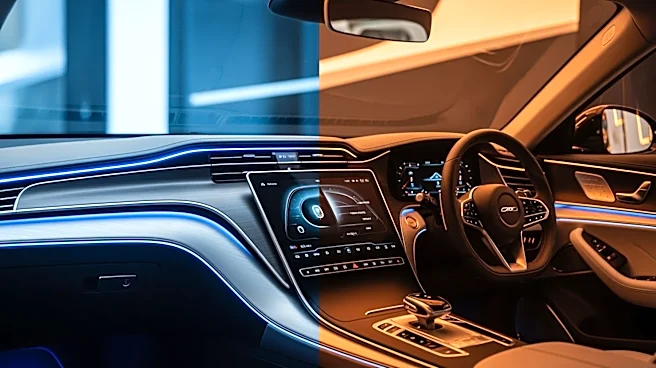
and luxury. The ES GT features a 'Celestial Sphere' interior concept with a sporty, immersive cockpit and integrated performance seats. It also debuts EXLANTIX's full carbon fiber trim panels, enhanced by ambient lighting. The EX8, on the other hand, focuses on optimizing sightlines and spatial adaptability, featuring an ultra-wide panoramic screen and a cohesive horizontal layout. Both models aim to redefine the human-machine interaction experience with advanced design elements.
Why It's Important?
The unveiling of these interior concepts by EXEED highlights the ongoing innovation in automotive design, particularly in the luxury segment. By integrating advanced materials like carbon fiber and focusing on user experience through spatial adaptability and ambient lighting, EXEED is setting new standards for vehicle interiors. This development is significant for the automotive industry as it reflects a shift towards more personalized and technologically integrated driving environments. It also underscores the competitive nature of the automotive market, where manufacturers are continuously pushing the boundaries of design and technology to attract consumers.
What's Next?
As EXEED continues to develop its product line, the focus will likely remain on enhancing the user experience through innovative design and technology. The success of these models at Auto China could influence future design trends in the automotive industry, encouraging other manufacturers to adopt similar approaches. Additionally, consumer feedback from these models may guide further refinements and innovations in EXEED's future offerings.
Beyond the Headlines
The introduction of these advanced interior concepts also raises questions about the future of automotive design and the role of technology in enhancing driver and passenger experiences. As vehicles become more connected and autonomous, the interior space will increasingly serve as a multifunctional environment, blending comfort, entertainment, and productivity. This shift could lead to broader changes in how vehicles are used and perceived, potentially impacting urban planning and transportation infrastructure.