




What's Happening?
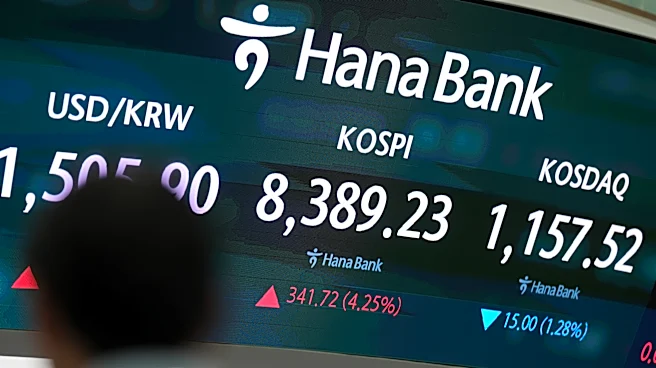
South Korean semiconductor giant SK Hynix has reached a $1 trillion market cap, joining Samsung Electronics and Micron, a US semiconductor manufacturer, in this exclusive club. The surge in demand for memory chips, driven by the global AI boom, has propelled
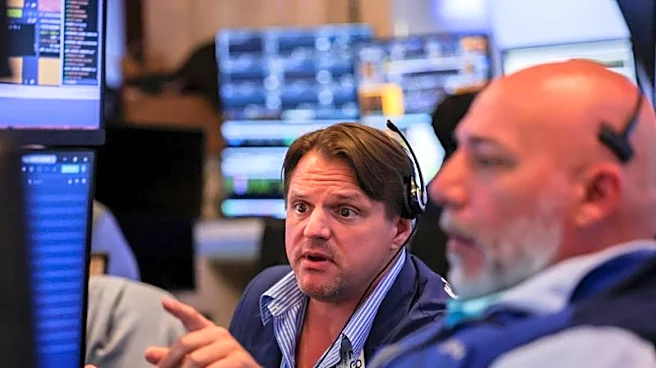
these companies to record valuations. Memory chips, once considered a niche segment of the semiconductor industry, have gained prominence due to the need for advanced AI tools and infrastructure. This demand has led to a global shortage of semiconductors, boosting profits for companies like SK Hynix and Samsung. However, the rapid rise in tech stocks has sparked concerns about an AI bubble and the potential for market volatility.
Why It's Important?
The achievement of a $1 trillion market cap by SK Hynix underscores the transformative impact of AI on the semiconductor industry. As AI technologies continue to evolve, the demand for memory chips is expected to grow, benefiting companies involved in their production. This development highlights the increasing importance of semiconductors in the tech sector and their role in supporting AI advancements. However, the concentration of market value in a few companies raises concerns about economic inequality and the potential risks of market volatility. The disparity in bonuses between SK Hynix and Samsung has already led to worker protests, indicating potential labor unrest in the industry.
What's Next?
The continued growth of AI technologies is likely to sustain the demand for memory chips, potentially leading to further market cap increases for companies like SK Hynix, Samsung, and Micron. However, the industry must address concerns about inequality and ensure that the benefits of the AI boom are shared with workers. Additionally, the potential for an AI bubble and market corrections remains a concern, requiring careful monitoring by investors and policymakers. The concentration of market value in a few companies could lead to significant economic impacts if downturns occur, necessitating strategies to mitigate risks.
Beyond the Headlines
The rise of SK Hynix and other semiconductor companies highlights broader economic shifts driven by AI technologies. As AI continues to integrate into various sectors, the demand for semiconductors will likely influence global economic patterns. This development also raises ethical questions about the distribution of wealth generated by technological advancements and the role of corporations in addressing inequality. The potential for market volatility underscores the need for diversified investment strategies and regulatory oversight to ensure stable economic growth.