







What's Happening?
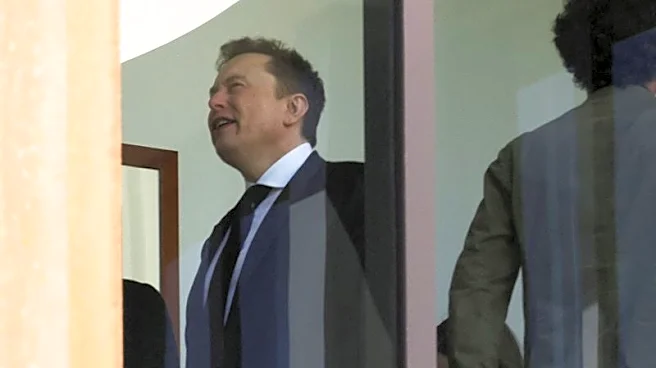
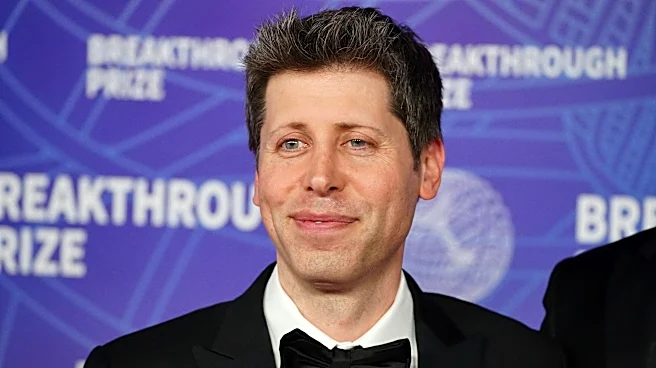
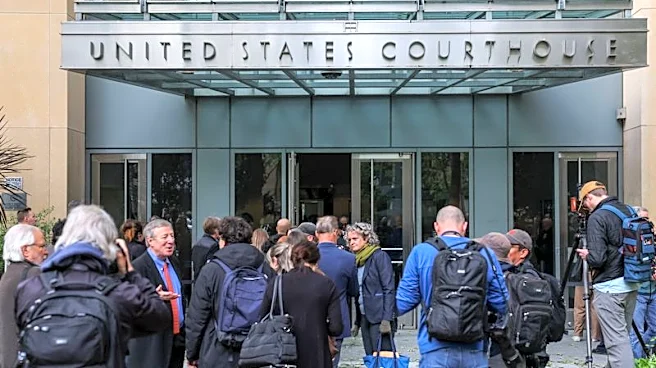
Elon Musk and Sam Altman appeared in a federal courtroom as part of a trial concerning the evolution and future governance of OpenAI. Musk's lawsuit against Altman could lead to financial damages and changes in OpenAI's governance, potentially affecting
its plans for an initial public offering. Musk testified that his motivation for co-founding OpenAI was to prevent a 'Terminator outcome' where AI could become a threat to humanity. He expressed concerns over AI safety and criticized Google's approach to AI development. Musk's attorney argued that OpenAI's shift towards a for-profit model, particularly with Microsoft's $10 billion investment, deviated from its original nonprofit mission. OpenAI's attorney countered that Musk was aware of the company's plans and that his claims were unfounded.
Why It's Important?
The trial highlights significant issues in the tech industry regarding AI development and governance. Musk's concerns about AI safety reflect broader debates on the ethical implications of AI technology. The outcome of the trial could influence how tech companies balance profit motives with ethical considerations. If OpenAI's governance changes, it may set a precedent for other AI companies, impacting investor confidence and regulatory approaches. The case also underscores the tension between innovation and safety in AI, a critical issue as AI technologies become more integrated into society.
What's Next?
The trial's outcome could lead to changes in OpenAI's governance structure, potentially affecting its IPO plans. Stakeholders in the tech industry, including investors and regulators, will be closely watching the case for its implications on AI governance. The trial may prompt discussions on establishing clearer guidelines for AI development and safety. Depending on the verdict, there could be increased scrutiny on tech companies' governance models, especially those transitioning from nonprofit to for-profit structures.