







What's Happening?
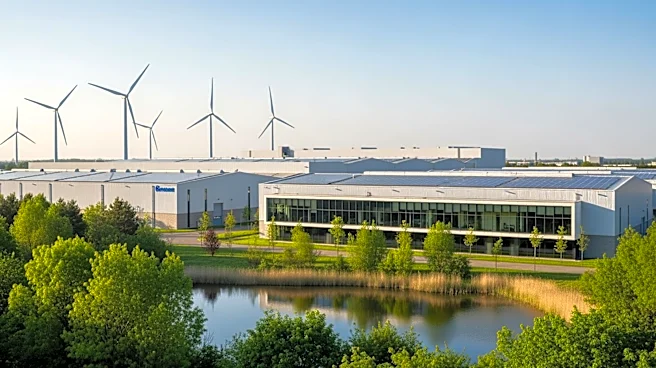
Epic Group, a leading apparel manufacturer, has inaugurated the Trimetro Manufacturing Campus in Khordha, Odisha. This facility represents a $100 million investment and is India's first fully net-zero carbon and net-zero water garment manufacturing site.
Spanning 40 acres, the campus is designed to produce 20 million garments annually for global markets. The project was partially funded by a $100 million debt financing package from the International Finance Corporation (IFC), which included sustainability-linked and green loans. The campus aims to integrate renewable energy sources and advanced water conservation systems, creating a model for sustainable industrial development.
Why It's Important?
The launch of the Trimetro Manufacturing Campus is significant as it sets a new benchmark for sustainable manufacturing in India. By achieving net-zero carbon and water balance, the facility addresses critical environmental concerns, potentially influencing other industries to adopt similar practices. This development also highlights the growing importance of sustainability in global supply chains, which could lead to increased demand for eco-friendly manufacturing solutions. Additionally, the creation of 10,000 jobs, with a focus on employing women, underscores the project's commitment to inclusive economic growth.
What's Next?
The success of the Trimetro Campus could encourage further investments in sustainable manufacturing across India and beyond. As global brands increasingly prioritize sustainability, facilities like Trimetro may become more common, potentially reshaping the apparel industry's environmental impact. Stakeholders, including government bodies and industry leaders, may look to replicate this model to meet international sustainability standards and consumer expectations.
Beyond the Headlines
The Trimetro Campus not only addresses environmental sustainability but also promotes social responsibility by creating job opportunities for women. This focus on gender inclusivity could inspire similar initiatives in other sectors, contributing to broader societal changes. Furthermore, the integration of advanced technologies in manufacturing processes may drive innovation and efficiency, setting a precedent for future industrial developments.