






What's Happening?
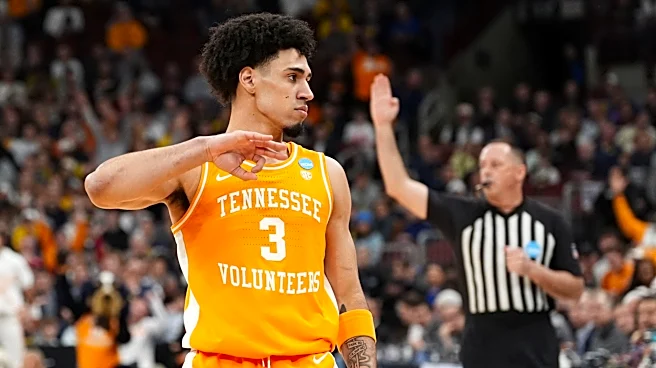
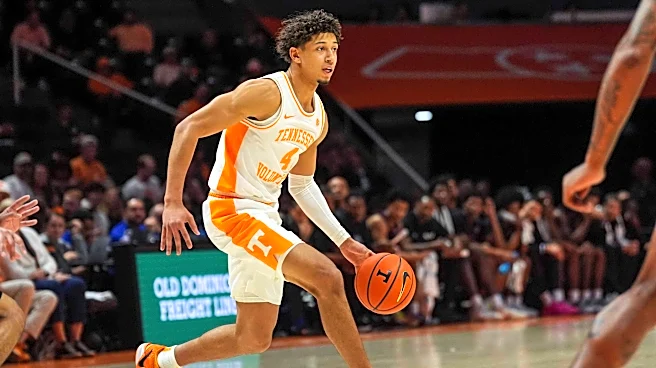
Amari Evans, a guard for the Tennessee Volunteers basketball team, has decided to enter the transfer portal after failing to secure a Name, Image, and Likeness (NIL) agreement that met his expectations. Despite both Evans and the team initially wanting
to continue their association, the inability to finalize a satisfactory NIL deal led to his departure. Head coach Rick Barnes, who has been active in the transfer portal, faces the challenge of replacing Evans, who was expected to be a key leader for the team. The Volunteers are reportedly committing significant resources to NIL deals, aiming to be among the top spenders in college basketball next season.
Why It's Important?
The departure of Amari Evans underscores the complexities and challenges introduced by the NIL era in college sports. As athletes gain the ability to profit from their personal brands, securing favorable agreements becomes crucial for both players and programs. Tennessee's situation highlights the competitive nature of NIL deals, which can influence player retention and recruitment. The Vols' commitment to substantial NIL spending reflects a broader trend in college athletics, where financial incentives are increasingly pivotal. This shift could reshape team dynamics and competitive balance, as programs with deeper financial resources may gain an edge in attracting top talent.
What's Next?
Tennessee will need to navigate the transfer portal to fill the void left by Evans and other departing players. With a significant portion of their roster moving on, the team is expected to actively pursue new talent to maintain competitiveness. The upcoming season is seen as critical, with the program investing heavily in NIL deals to bolster its roster. Coach Rick Barnes, who has a lifetime contract, will likely focus on integrating new players and maximizing the potential of NIL opportunities to build a strong team. The broader college basketball landscape will continue to adapt to the evolving NIL environment, with potential regulatory changes and strategic adjustments by programs.