








What's Happening?
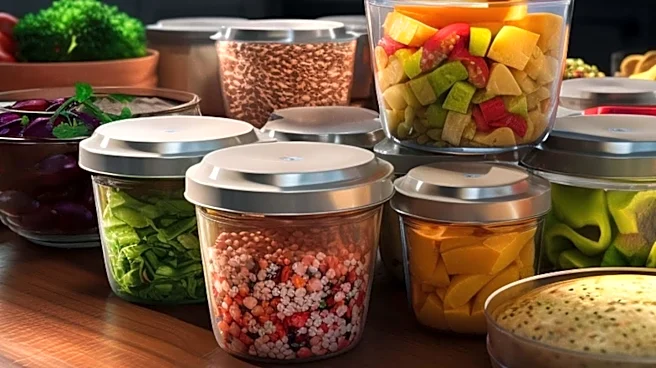
Proper storage of fruits and vegetables can significantly extend their shelf life, reducing food waste and saving money for U.S. households. Factors such as moisture, temperature, and airflow play crucial roles in how quickly produce spoils. Experts recommend
waiting to wash produce until just before consumption and keeping it dry in the refrigerator. Overcrowding the fridge can block airflow, affecting temperature consistency. Different types of produce have specific storage needs; for example, herbs last longer when treated like flowers, while root vegetables can be stored in water to maintain crispness. Confusion over food labels also contributes to waste, as many consumers misinterpret 'purchase-by' dates as safety indicators.
Why It's Important?
Reducing food waste has significant environmental and economic implications. Household food waste represents a large portion of overall food waste, contributing to greenhouse gas emissions when discarded food decomposes in landfills. By adopting better storage practices, consumers can reduce waste, conserve resources, and lower their grocery bills. This aligns with broader sustainability goals and can have a cumulative positive impact if adopted widely. Additionally, understanding what constitutes spoiled produce can prevent unnecessary waste, as slightly wilted or discolored items are often still safe to eat.
Beyond the Headlines
The issue of food waste extends beyond individual households, affecting the entire food supply chain. By reducing waste at the consumer level, there is potential to decrease the demand for resources used in food production, transportation, and storage. This can lead to a more sustainable food system overall. Moreover, educating consumers about proper storage techniques and the true meaning of food labels can empower them to make informed decisions, ultimately contributing to environmental conservation efforts.