
What's Happening?
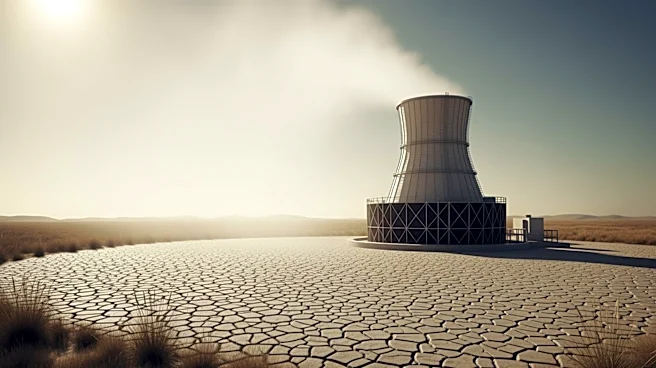
A significant expansion of artificial intelligence (AI) data centers is occurring across drought-affected areas in the United States, raising concerns about water resource management. According to a report,
more than 60% of the U.S. is experiencing drought conditions, and the construction of new data centers, which require substantial water for cooling, is intensifying the strain on water supplies. The Environmental and Energy Study Institute notes that there are over 5,000 data centers in the U.S., with many new ones being built in the South, where drought conditions are severe. Experts warn that the increased demand for water by these facilities could lead to competition with residential and commercial needs, exacerbating water shortages.
Why It's Important?
The rapid growth of AI infrastructure in drought-prone areas highlights a critical intersection between technological advancement and environmental sustainability. Data centers are essential for supporting AI capabilities, but their high water consumption poses a challenge in regions already facing water scarcity. This situation underscores the need for balancing technological progress with environmental stewardship. The strain on water resources could lead to increased costs for local communities and businesses, potentially impacting economic stability and growth in these areas. Furthermore, the environmental justice implications are significant, as data center development often disproportionately affects marginalized communities.
What's Next?
As the demand for AI capabilities continues to rise, there is a pressing need for the tech industry to adopt more sustainable practices. This includes developing cooling technologies that minimize water use and strategically locating new data centers in areas with more abundant water resources. Policymakers and industry leaders must collaborate to ensure that the expansion of AI infrastructure does not compromise water availability for other critical uses. Additionally, there may be increased advocacy for regulatory measures to manage the environmental impact of data centers.
Beyond the Headlines
The environmental impact of data centers extends beyond water consumption. The energy required for cooling and operating these facilities contributes to greenhouse gas emissions, further complicating efforts to combat climate change. As AI technology becomes more integrated into daily life, the industry faces ethical considerations regarding its environmental footprint. Long-term, the sustainability of AI infrastructure will depend on innovations that reduce both water and energy consumption, ensuring that technological advancements do not come at the expense of environmental health.