

What's Happening?
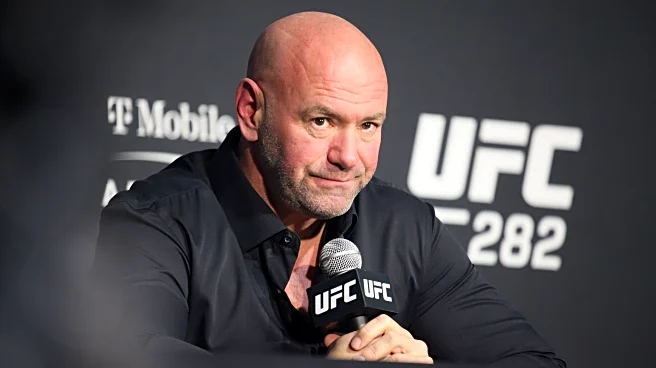
Dana White, the CEO of the Ultimate Fighting Championship (UFC), recently shared insights into the challenging early days of the organization. White recalled acquiring the UFC for $2 million during a period when the company was struggling significantly,
to the extent that it did not even own its website domain, UFC.com. This acquisition marked the beginning of a transformative journey for the UFC, which has since grown into a major sports entertainment entity. White's reflections were part of an interview with Luke Burbank on 'CBS Sunday Morning,' where he discussed the strategic moves and efforts that were necessary to rescue and revitalize the UFC, turning it into a globally recognized brand.
Why It's Important?
Dana White's recounting of the UFC's early struggles highlights the importance of strategic leadership and vision in transforming a failing business into a successful enterprise. The UFC's growth under White's leadership has had a significant impact on the sports entertainment industry, popularizing mixed martial arts (MMA) and creating new opportunities for athletes and businesses alike. The UFC's success story serves as a case study in effective business turnaround strategies, emphasizing the role of innovation, marketing, and brand development in achieving long-term growth. This transformation has also contributed to the broader acceptance and mainstream appeal of MMA, influencing sports culture and media coverage.
What's Next?
As the UFC continues to expand its global footprint, future developments may include further international events, partnerships, and digital innovations to enhance fan engagement. The organization is likely to focus on diversifying its offerings and exploring new markets to sustain growth. Stakeholders, including athletes, sponsors, and media partners, will be closely watching the UFC's strategic moves to capitalize on emerging trends in sports entertainment. Additionally, the UFC may face challenges related to regulatory issues and competition from other sports organizations, necessitating adaptive strategies to maintain its leadership position.