
What's Happening?
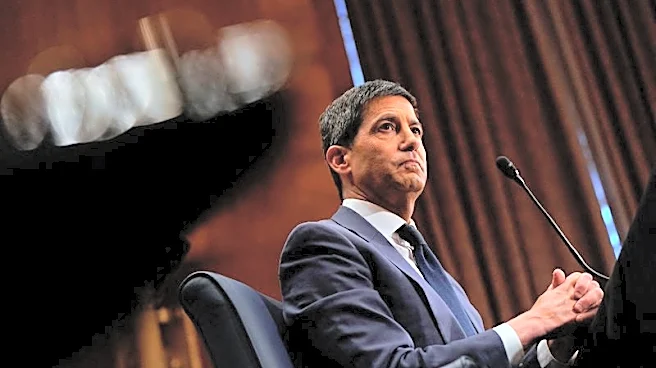
Federal Reserve Bank of Cleveland President Beth Hammack has expressed dissent against the Federal Reserve's current policy statement, which maintains an easing bias. Hammack's opposition is rooted in the increased
uncertainty surrounding the economic and inflation outlooks. The Federal Open Market Committee (FOMC) recently voted to keep the interest rate target range unchanged at 3.5% to 3.75%, but Hammack and other officials believe that the language suggesting a pause in the easing cycle is no longer appropriate. Hammack highlighted the broad-based inflation pressures and the additional inflationary pressure from rising oil prices as key concerns. Her dissent was part of an unusually contentious FOMC vote, with four officials breaking from the consensus.
Why It's Important?
Hammack's dissent underscores a significant division within the Federal Reserve regarding the future direction of monetary policy. The decision to maintain an easing bias amidst rising inflation and economic uncertainty could have far-reaching implications for the U.S. economy. If inflation continues to rise, it could erode purchasing power and increase the cost of living, particularly affecting lower-income households. Additionally, the potential for future rate hikes could impact borrowing costs for businesses and consumers, influencing economic growth and investment decisions. The internal disagreement within the Fed highlights the challenges of navigating monetary policy in a complex economic environment.
What's Next?
The Federal Reserve will likely continue to monitor economic indicators closely to determine the appropriate course of action. Future meetings may see further debates on whether to adjust the interest rate policy in response to evolving economic conditions. Stakeholders, including businesses and financial markets, will be watching for any signals from the Fed regarding potential rate hikes or changes in policy direction. The ongoing uncertainty may lead to increased volatility in financial markets as investors react to new data and Fed communications.