




What's Happening?
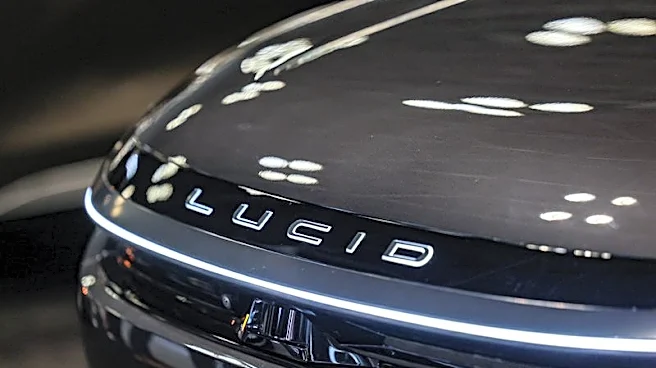
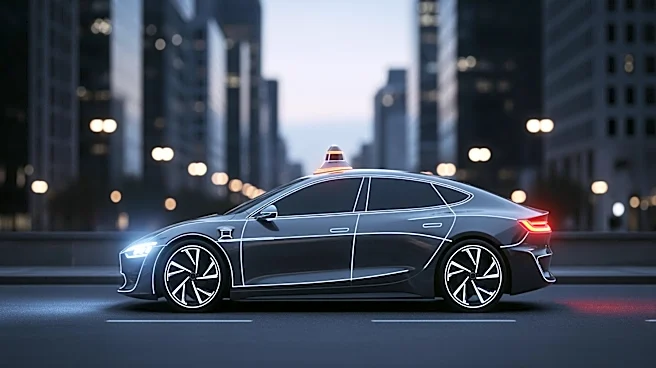
Uber and Nuro have commenced employee testing of the Lucid Gravity robotaxi in San Francisco. The Lucid Gravity SUV, equipped with Nuro's autonomous driving system powered by Nvidia's Drive AGX Thor, is being used for test rides by select Uber employees.
This marks a significant phase in the partnership between Uber and Nuro, which began in July 2025 with Uber's substantial investments in both Lucid and Nuro. The testing phase aims to evaluate the integration of the autonomy stack, vehicle performance, and rider experience in a real-world environment, focusing on the technical challenges of pickup and drop-off operations.
Why It's Important?
The testing of the Lucid Gravity robotaxi represents a critical step in Uber's strategy to maintain its presence in the ride-hailing market while leveraging autonomous vehicle technology. By partnering with Nuro, Uber can offer a premium robotaxi service without incurring the full costs of developing autonomous technology in-house. This initiative could significantly impact the future of urban transportation, potentially reducing the need for human drivers and lowering operational costs. The success of this project could pave the way for broader adoption of autonomous vehicles in ride-hailing services, influencing industry standards and regulatory frameworks.
What's Next?
Following the employee testing phase, Uber and Nuro plan to launch the Lucid Gravity robotaxi service to the public in San Francisco later in 2026. Uber has committed to purchasing at least 20,000 Lucid Gravity SUVs over the next six years, indicating a long-term investment in autonomous ride-hailing. The companies will continue to refine the technology and address any challenges identified during testing. As the service expands, it will be crucial to monitor regulatory developments and public acceptance of autonomous vehicles, which will play a significant role in the service's success and potential expansion to other cities.