
What's Happening?
Xiankun Wu, CEO and cofounder of Kuse, an AI-powered visual workspace based in San Mateo, California, has integrated AI employees into the company's operations. This move was driven by the capabilities
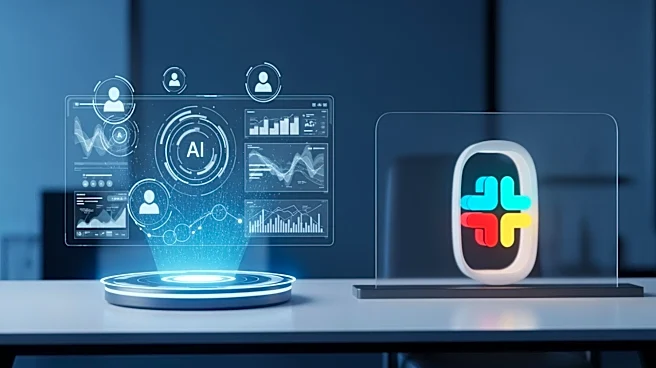
of OpenClaw, an AI system that has become more autonomous and customized, allowing it to handle repetitive tasks and assign work to human employees. The introduction of AI employees has significantly increased efficiency, with Wu estimating that 60% to 70% of work can now be managed by AI. However, the integration of AI also posed challenges, such as the potential for unauthorized access to sensitive company data. To address this, Kuse modified OpenClaw's architecture to ensure AI employees understand roles, permissions, and relationships within the company. Despite the efficiency gains, the constant presence of AI led to the creation of a 'human-only' Slack channel, providing a space for employees to communicate without AI intervention.
Why It's Important?
The integration of AI employees at Kuse highlights a significant shift in workplace dynamics, where AI is not only a tool but also a participant in the workflow. This development underscores the growing role of AI in enhancing productivity by taking over routine tasks, allowing human employees to focus on more creative and strategic work. However, it also raises concerns about data privacy and the need for clear boundaries between human and AI roles. The creation of a 'human-only' space reflects the necessity for human interaction and decision-making, even in highly automated environments. This case illustrates the broader implications of AI in the workplace, where efficiency gains must be balanced with ethical considerations and the preservation of human agency.
What's Next?
As AI continues to evolve, companies like Kuse may further refine the integration of AI employees to enhance collaboration and efficiency. Future developments could include more sophisticated AI systems capable of understanding complex human interactions and making more nuanced decisions. Businesses will need to establish clear guidelines and protocols to manage AI-human interactions, ensuring that AI complements rather than replaces human roles. Additionally, there may be increased focus on training human employees to work effectively alongside AI, emphasizing skills such as critical thinking, creativity, and interpersonal communication. The ongoing evolution of AI in the workplace will likely prompt discussions about the future of work, job security, and the ethical use of AI technology.