







What's Happening?
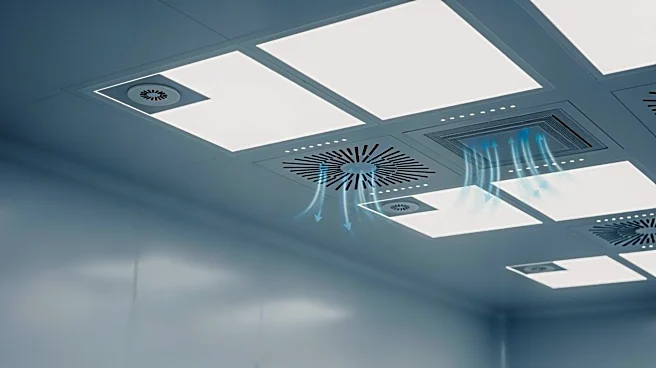
Cleanroom facilities are evolving towards higher classifications and more aggressive delivery schedules, making ceiling systems a mechanical necessity. The ceiling-down philosophy has become crucial in sectors like pharmaceuticals, biotechnology, and microelectronics,
where structural and functionality requirements vary. In these environments, ceilings must mitigate vibration, manage airflow, and support automated systems. The ceiling acts as an anchor point, minimizing field clashes and ensuring structural integrity. Innovations such as walkable ceiling systems and pre-cut panels are reducing labor and installation time, enhancing the reliability and efficiency of cleanroom facilities.
Why It's Important?
Ceiling systems are critical to the performance and safety of cleanrooms, which are essential in industries like pharmaceuticals and microelectronics. By providing a structurally sound platform, ceilings ensure cleanability, airtight integrity, and support for mechanical systems. This reduces the risk of contamination and enhances operational efficiency. The strategic design and engineering of ceiling systems can prevent costly field delays and improve compliance with industry standards. As cleanrooms become more advanced, the role of ceiling systems in maintaining environmental control and supporting technological innovation becomes increasingly important.
What's Next?
The continued evolution of cleanroom ceiling systems will likely focus on further reducing installation time and improving structural reliability. Innovations such as embedded raceways and pre-wired panels may become standard, streamlining construction and minimizing hazards. As industries demand higher performance cleanrooms, ceiling systems will need to adapt to new technologies and regulatory requirements. Collaboration between cleanroom designers, engineers, and industry stakeholders will be crucial in developing solutions that meet the needs of modern facilities.
Beyond the Headlines
The advancement of cleanroom ceiling systems highlights the importance of engineering and design in maintaining industry standards and ensuring safety. As cleanrooms become more complex, ethical considerations regarding labor practices and environmental impact may arise. The integration of advanced ceiling systems could lead to shifts in industry practices, requiring updates to regulations and policies. Additionally, the focus on reducing on-site labor and schedule congestion may influence workforce dynamics and training requirements in the construction industry.