
What's Happening?
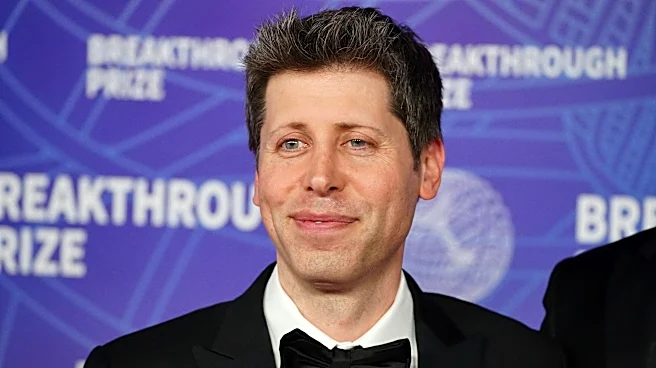
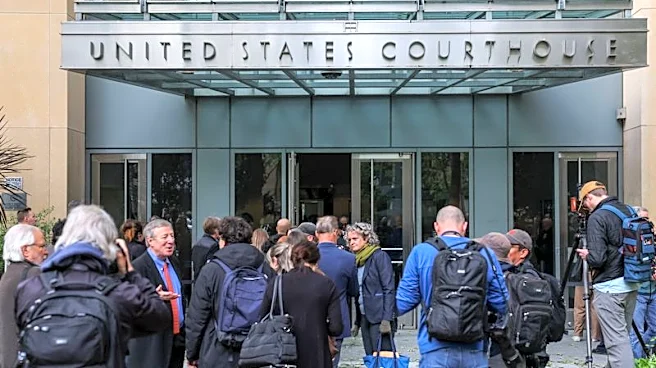
Elon Musk testified in a federal court in Oakland, California, accusing OpenAI CEO Sam Altman of misleading him about the organization's intentions. Musk claimed that he was deceived into believing he was funding
a nonprofit dedicated to developing artificial intelligence for the benefit of humanity. Instead, he alleges that OpenAI transformed into a for-profit entity, raising significant funds from Microsoft. Musk expressed regret over his $38 million investment, which he described as 'free funding' that helped create a company now valued at $800 billion. During the trial, Musk sparred with OpenAI's lawyer, William Savitt, who argued that Musk's legal actions were an attempt to undermine OpenAI after launching his own AI startup, xAI.
Why It's Important?
The trial highlights the tensions between nonprofit and for-profit models in the tech industry, particularly in the development of artificial intelligence. Musk's allegations, if proven, could impact OpenAI's reputation and its partnerships, especially with major investors like Microsoft. The case also underscores the challenges of maintaining ethical standards in rapidly evolving tech sectors. For Musk, the trial represents a significant personal and professional conflict, as he seeks to protect his interests in the AI field while questioning the integrity of a major competitor.
What's Next?
The trial is expected to continue with further testimonies from key figures involved in OpenAI's development. The outcome could influence future investments and regulatory scrutiny in the AI industry. Stakeholders, including tech companies and investors, will be closely monitoring the proceedings for potential shifts in the competitive landscape. The court's decision may also set precedents for how tech companies balance profit motives with ethical considerations.