
What's Happening?
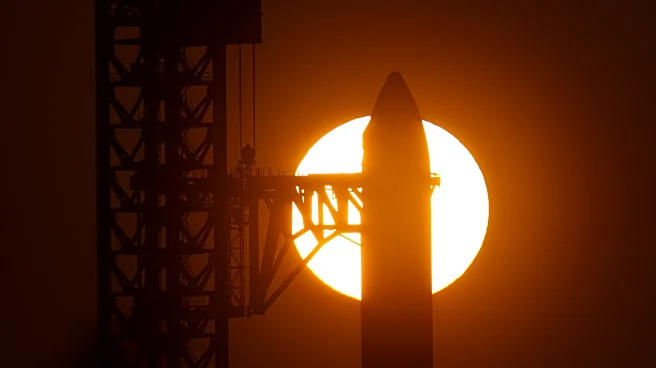
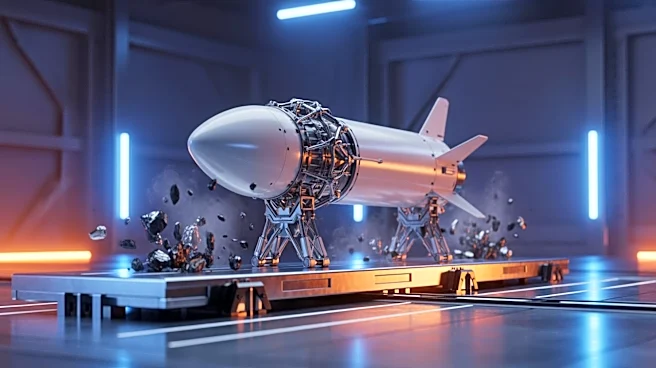
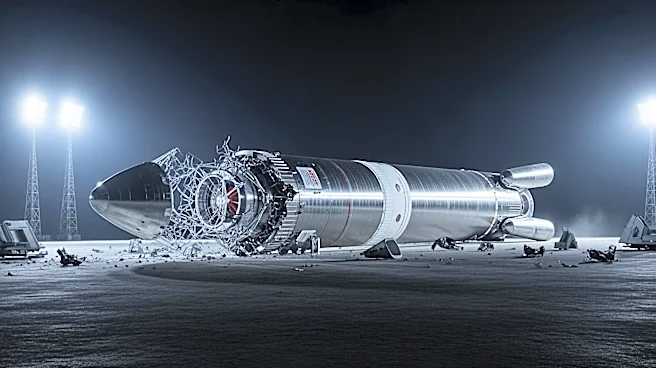
SpaceX's latest Starship test flight ended with the Super Heavy booster breaking apart after a failed splashdown attempt in the Gulf. The Flight 12 mission, which introduced the V3 design with upgraded
Raptor engines, marked the first full test flight for the rocket. Despite one engine failing to ignite at liftoff, the rocket completed stage separation. However, the Super Heavy booster failed to relight its engines for a controlled landing, resulting in a crash. The upper-stage Starship continued to complete several test objectives, including deploying dummy satellites.
Why It's Important?
The failure of the Super Heavy booster to land successfully highlights the challenges SpaceX faces in developing reusable rocket technology. This incident could delay future test flights and impact NASA's Artemis program, which relies on Starship for crewed lunar landings. The success of SpaceX's reusable rocket technology is crucial for reducing costs and increasing the frequency of space missions. The crash may prompt SpaceX to refine its booster landing techniques and engine reliability to ensure the success of future missions.
What's Next?
SpaceX is likely to conduct a thorough investigation into the booster crash to identify and rectify the issues that led to the failure. The company may implement design and procedural changes to improve the reliability of future launches. NASA and other stakeholders in the Artemis program will closely monitor SpaceX's progress, as the success of the Starship is integral to planned lunar missions. The incident may also influence the timelines and strategies for upcoming test flights and missions.
Beyond the Headlines
The crash of the Super Heavy booster raises questions about the feasibility and safety of reusable rocket technology. The incident may lead to discussions on the balance between innovation and risk in space exploration. It also highlights the competitive landscape of the space industry, as companies like Blue Origin are also developing lunar landers. The outcome of SpaceX's investigation and subsequent improvements could set new standards for reusable rocket technology.