
What's Happening?
Gold prices have seen a significant increase, driven by heightened geopolitical tensions following the U.S. capture of Venezuela's president, Nicolas Maduro. This development has intensified global uncertainties,
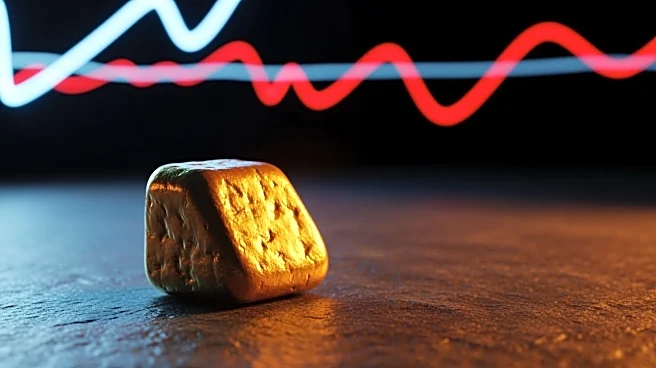
prompting investors to seek safe-haven assets like gold. Spot gold rose by 0.8% to $4,485.39 per ounce, nearing its record high of $4,549.71. U.S. gold futures for February delivery also increased by 1% to $4,496.10. The demand for gold is further bolstered by expectations of Federal Reserve interest rate cuts, with traders anticipating two rate reductions this year. The market is also closely watching the upcoming U.S. monthly employment report, which is expected to show a slight decrease in job additions for December.
Why It's Important?
The surge in gold prices reflects broader economic and geopolitical dynamics, highlighting investor concerns over global stability and monetary policy. As a traditional safe-haven asset, gold's rising value indicates a lack of confidence in other investment avenues amid geopolitical tensions and potential economic shifts. The anticipated Federal Reserve rate cuts could further influence investment strategies, as lower interest rates typically enhance the appeal of non-yielding assets like gold. This trend could impact various stakeholders, including investors, central banks, and financial markets, as they navigate the evolving economic landscape.
What's Next?
Market participants are awaiting the U.S. monthly employment report, which could provide further insights into the Federal Reserve's policy direction. Additionally, the geopolitical situation involving Venezuela may continue to influence market sentiment and safe-haven demand. Analysts, such as those from Morgan Stanley, project that gold prices could reach $4,800 by the fourth quarter, driven by falling interest rates and robust central bank purchases. The Federal Reserve's future actions, particularly regarding interest rates, will be closely monitored as they could significantly impact gold prices and broader economic conditions.