






What's Happening?
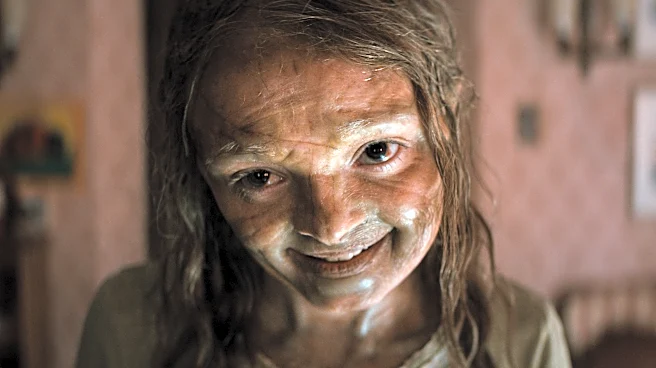
The newly released horror film 'The Mummy,' directed by Lee Cronin, has been criticized for its lack of originality and excessive use of gore. The film, which is a supernatural thriller, follows the story of a young girl named Katie who returns home after
being missing for eight years. However, she is no longer the sweet child her family remembers, but rather a corpse-like figure possessed by an evil spirit. The film's plot has drawn comparisons to 'The Exorcist,' with critics noting similarities in the storyline, such as the possession of a child and the setting transition from the Middle East to an American home. Despite its chilling premise, the film has been described as lacking in quality and coherence, with storytelling conveniences that detract from its believability.
Why It's Important?
The reception of 'The Mummy' highlights ongoing challenges in the horror film industry, where originality and effective storytelling are crucial for success. The film's reliance on gore and shock value over substantive plot development may impact its box office performance and audience reception. This case underscores the importance of innovation in genre filmmaking, as audiences increasingly seek fresh narratives and engaging content. The film's criticism could influence future horror productions to prioritize creative storytelling and character development over formulaic approaches.
What's Next?
As 'The Mummy' continues its theatrical run, its performance at the box office will be closely watched. The film's reception may prompt discussions among filmmakers and studios about the direction of future horror projects. Audience feedback and critical reviews could lead to a reevaluation of current trends in horror filmmaking, potentially encouraging a shift towards more original and thought-provoking content. Additionally, the film's performance may influence the marketing strategies and production decisions for upcoming horror releases.